The Silent Heart Attack Risk Nobody Talks About: Get 96 Tests Including Advanced Heart Risk Markers for Just ₹2499 in Hyderabad
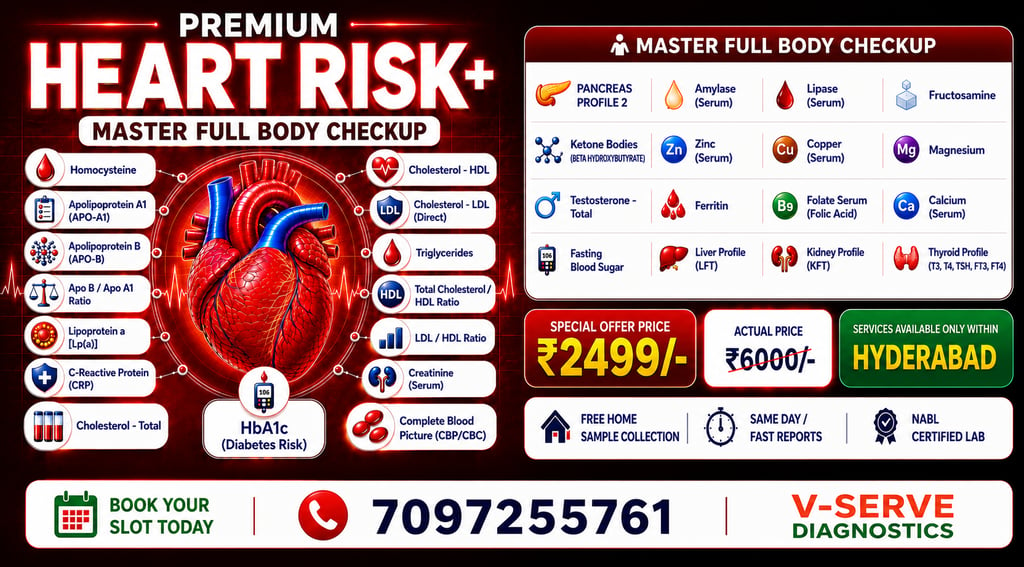
Discover why standard cholesterol tests miss the real heart attack warning signs. V-Serve Diagnostics' Premium Heart Risk+ Master Full Body Checkup covers 96 tests — including Homocysteine, ApoB, Lipoprotein(a), CRP, HbA1c, Thyroid, Liver, Kidney & more — for just ₹2499 with free home sample collection in Hyderabad. NABL Certified Lab. Same Day Reports. Book Today: 7097255761.
6/6/202621 min read
The Complete Heart Risk & Full Body Checkup Guide for Hyderabad: Why ₹2499 Could Save Your Life
Published by V-Serve Diagnostics | NABL Certified Lab | Hyderabad
Every year, thousands of people in Hyderabad suffer heart attacks they never saw coming. They had no chest pain. No warning signs. Normal cholesterol on their last basic test. Yet their arteries were silently narrowing, inflammation was building up in their vessel walls, and their heart was under stress that no standard test had detected.
This is the silent epidemic of modern urban India — and Hyderabad is right at the center of it.
If you are a working professional, an IT employee, a business owner, or anyone living the fast-paced Hyderabad lifestyle, this article was written for you. You will learn exactly which blood tests predict heart disease before symptoms appear, why standard cholesterol tests are not enough, what advanced cardiac markers like ApoB, Lipoprotein(a), Homocysteine, and CRP actually measure, and why V-Serve Diagnostics' Premium Heart Risk+ Master Full Body Checkup — available at a special price of just ₹2499 — may be the most important investment you make this year.
Read this fully. It could change — or save — your life.
The Silent Heart Attack Crisis in Hyderabad: What Nobody Is Telling You
Hyderabad has transformed dramatically over the past two decades. Once a city of traditional neighborhoods, it is now home to one of Asia's largest IT and pharmaceutical corridors. Millions of residents work long hours at desks, eat quickly, sleep late, and exercise rarely. The social fabric of the city has shifted toward high-pressure careers, late-night deliveries from food apps, and screen time that extends well past midnight.
The cardiovascular consequences of this lifestyle change are severe — and they are not just affecting people in their 50s. Cardiologists across Hyderabad's leading hospitals are increasingly reporting heart attacks in patients aged 30 to 45. These are professionals at the peak of their careers. Many had never had a health checkup in years.
The reason is simple: the tests most people get do not catch the real danger signals early enough.
A standard health checkup typically measures total cholesterol, blood sugar, and basic organ function. These are useful. But they miss the advanced markers that modern cardiology has identified as the strongest predictors of heart attack risk — markers that can show danger years before a first cardiac event occurs.
The Premium Heart Risk+ Master Full Body Checkup from V-Serve Diagnostics was designed specifically to close that gap. It combines 15 advanced cardiac risk markers with a comprehensive full-body panel including pancreas function, metabolic nutrition, liver health, kidney health, thyroid function, and more — all under one package, with free home sample collection in Hyderabad, and results delivered fast.
Why High Cholesterol Alone Doesn't Tell the Full Story
One of the most dangerous misconceptions in public health is this: "My cholesterol was normal, so my heart must be fine."
Research published in leading cardiology journals has consistently shown that a significant percentage of people who suffer heart attacks have cholesterol levels within the so-called normal range at the time of their event. This happens because cholesterol is only one piece of a very complex puzzle.
The real question is not just how much cholesterol is in your blood — it's the type of cholesterol particles, their size, their behavior inside your arteries, and the inflammatory environment they are operating in.
This is exactly why the Premium Heart Risk+ package includes tests that go far beyond a standard lipid profile. Let us walk through each one.
Understanding Your Heart Risk Markers: A Test-by-Test Guide
Homocysteine: The Hidden Cardiac Toxin
What it is: Homocysteine is an amino acid produced naturally when your body breaks down protein. At normal levels, it is harmless. When it accumulates in the blood — a condition called hyperhomocysteinemia — it becomes directly toxic to the inner lining of your blood vessels.
What it detects: Elevated homocysteine levels are strongly associated with increased risk of heart attack, stroke, blood clots, and arterial damage. High homocysteine injures the endothelium (the delicate inner lining of arteries), making it easier for plaque to form and for arteries to narrow.
Why it rises: Deficiency in Vitamin B9 (folate) and Vitamin B12 is the most common cause. Poor diet, alcohol consumption, kidney disease, thyroid problems, and certain medications can also elevate levels.
Symptoms of elevation: Often none in early stages. In advanced stages, fatigue, cognitive decline, numbness in limbs, and increased tendency to form blood clots may appear.
Why Hyderabad adults must test: A vegetarian or semi-vegetarian diet that is low in B12 (found mainly in animal products), combined with the stress of a demanding professional lifestyle, puts many Hyderabad residents at elevated homocysteine risk without knowing it. A homocysteine test in Hyderabad through V-Serve Diagnostics can identify this silent risk and guide simple dietary or supplement corrections before damage occurs.
Apolipoprotein A1 (APO-A1): Your Artery's Best Protector
What it is: Apolipoprotein A1 is the primary protein component of HDL cholesterol — the so-called "good cholesterol." ApoA1 is responsible for removing excess cholesterol from artery walls and transporting it back to the liver for disposal through a process called reverse cholesterol transport.
What it detects: Low ApoA1 levels indicate that your body's arterial protection system is compromised, even if your standard HDL reading looks acceptable. It is considered a more reliable predictor of cardiovascular protection than HDL alone.
Why it matters: Two people can have identical HDL readings but very different ApoA1 levels, reflecting very different levels of actual heart protection. The Apolipoprotein A1 test in Hyderabad fills this gap.
Apolipoprotein B (APO-B): The Particle That Causes Plaque
What it is: Apolipoprotein B is the structural protein found on all "bad" cholesterol particles — LDL, VLDL, and IDL. Every single atherogenic (plaque-forming) particle in your blood carries exactly one ApoB molecule.
What it detects: While LDL cholesterol measures the amount of cholesterol in LDL particles, ApoB counts the actual number of dangerous particles. Research consistently shows that ApoB is a more accurate predictor of cardiovascular risk than LDL cholesterol, particularly in people with metabolic syndrome, obesity, or diabetes.
The critical insight: Someone with high triglycerides and insulin resistance may have a normal LDL-cholesterol reading but a very high particle count — meaning a high ApoB. This person is at significant risk but would be missed by a standard lipid panel. The Apolipoprotein B test in Hyderabad provided in this package addresses exactly this blind spot.
Apo B / Apo A1 Ratio: The Most Precise Cardiac Risk Ratio Available
What it is: This ratio compares the number of bad cholesterol particles (ApoB) against the protective HDL-associated particles (ApoA1). It gives a single number that reflects the balance between your heart's attack forces and its defense forces.
What it detects: An elevated Apo B to Apo A1 ratio is considered by many cardiologists to be the single most predictive ratio for future cardiovascular events — more accurate than the total cholesterol/HDL ratio or the LDL/HDL ratio alone.
Why it matters for Hyderabad residents: In people with metabolic syndrome — increasingly common in Hyderabad's sedentary professional population — this ratio often comes back dangerously elevated even when individual cholesterol numbers appear normal.
Lipoprotein(a) [Lp(a)]: The Genetic Risk You Cannot Change With Diet
What it is: Lipoprotein(a) is a specialized lipoprotein particle that resembles LDL but carries an additional protein called apolipoprotein(a). Unlike LDL, your Lp(a) level is almost entirely determined by your genetics — meaning diet and exercise alone cannot significantly alter it.
What it detects: Elevated Lp(a) is a significant independent risk factor for heart attack, stroke, and aortic valve disease. It promotes clot formation and contributes to plaque buildup through mechanisms different from regular LDL.
Why it is critically important: Because Lp(a) is genetically determined, many people with a family history of early heart disease may have elevated Lp(a) and have no idea. The Lipoprotein(a) test in Hyderabad is not routinely included in basic checkup packages — but V-Serve Diagnostics includes it in this panel precisely because of its strong predictive value.
Who especially needs this test: Anyone with a parent or sibling who had a heart attack before age 55 (men) or 65 (women) should know their Lp(a) level. Knowledge of high Lp(a) informs medical decisions about more aggressive statin therapy, lifestyle intensification, and future treatment options.
C-Reactive Protein (CRP): Measuring Inflammation in Your Arteries
What it is: C-Reactive Protein is a substance produced by the liver in response to inflammation anywhere in the body. Chronic, low-grade inflammation — the kind that doesn't cause obvious symptoms — is now recognized as a central driver of cardiovascular disease, cancer, diabetes, and metabolic disorders.
What it detects: Elevated CRP, particularly the high-sensitivity version (hs-CRP), indicates that inflammatory processes are active in the body — including within arterial walls. Inflamed arteries are unstable arteries, prone to plaque rupture, which is the immediate cause of most heart attacks.
The lifestyle connection: Chronic stress, poor sleep, processed food diets, smoking, obesity, and sedentary behavior all raise CRP. The CRP test in Hyderabad is a direct window into the inflammatory load your cardiovascular system is carrying right now.
The Complete Lipid Profile: Total Cholesterol, HDL, LDL, Triglycerides, and Key Ratios
The package includes a full cholesterol profile in Hyderabad — Total Cholesterol, HDL Cholesterol, LDL Cholesterol (Direct), Triglycerides, Total Cholesterol/HDL Ratio, and LDL/HDL Ratio.
HDL Cholesterol is your protective "good" cholesterol. Levels above 60 mg/dL are cardioprotective. Low HDL — common in sedentary, obese, or diabetic individuals — is a major independent risk factor.
LDL Cholesterol (Direct) is the primary target of standard cardiac risk management. Direct LDL measurement is more accurate than the calculated method, especially in people with elevated triglycerides.
Triglycerides are fats circulating in your blood. High triglycerides — driven by refined carbohydrates, sugar, alcohol, and insulin resistance — are associated with an increased risk of pancreatitis and cardiovascular disease.
Total Cholesterol/HDL Ratio and LDL/HDL Ratio are important composite markers that give a more complete picture than any single value alone.
HbA1c: The Most Important Diabetes Risk Test You Are Probably Not Getting
What it is: HbA1c (Glycated Haemoglobin) measures your average blood sugar level over the past two to three months. Unlike a fasting blood sugar test — which only shows a snapshot of your sugar at one moment — HbA1c reveals your sustained glucose control.
What it detects: HbA1c identifies prediabetes (5.7–6.4%) and diabetes (6.5% and above). It is considered by diabetes specialists as the gold standard for diabetes screening because it is not affected by a single meal, fasting status, or stress-related sugar spikes.
The difference between HbA1c and fasting blood sugar: Fasting sugar tells you where your glucose is right now. HbA1c tells you where it has been for months. Many people have normal fasting sugar but elevated HbA1c — meaning they are already developing insulin resistance and are at higher risk for diabetes and heart disease, but would be missed by a basic sugar test alone.
Why this matters for heart health: Diabetes is one of the strongest independent risk factors for cardiovascular disease. People with diabetes have two to four times higher risk of heart disease than non-diabetics. Early detection of prediabetes — when the condition is still fully reversible — can prevent not just diabetes but the accompanying cardiovascular damage. The HbA1c screening in this package ensures you get this critical insight.
Creatinine Serum: Protecting Your Kidneys Before Damage Becomes Permanent
What it is: Creatinine is a waste product generated by normal muscle metabolism and filtered out by healthy kidneys. Rising creatinine in the blood signals declining kidney function.
What it detects: Elevated creatinine indicates the kidneys are not filtering efficiently. Chronic kidney disease (CKD) is both a consequence of diabetes and hypertension and a direct contributor to cardiovascular risk. CKD dramatically increases the risk of heart disease, independent of other risk factors.
Why early detection matters: Kidney damage that is caught early — before creatinine rises significantly — can often be slowed or arrested with lifestyle changes and medication. Kidney function detected at an advanced stage leaves far fewer options.
Complete Blood Picture (CBC): The Foundational Health Snapshot
The Complete Blood Picture (also called Complete Blood Count or CBC) measures all major components of blood — Red Blood Cells, White Blood Cells, Haemoglobin, Haematocrit, Platelets, and multiple differential counts.
It can detect:
Anaemia (low haemoglobin) — a major cause of unexplained fatigue, breathlessness, and reduced exercise capacity
Infections and inflammatory conditions
Blood cancers in early stages
Clotting disorders
Nutritional deficiencies affecting blood cell production
This CBC test in Hyderabad is the foundation upon which all other tests build.
The Master Full Body Checkup Panel: Every Organ System Evaluated
Pancreas Profile: Amylase, Lipase, and Fructosamine
Amylase and Lipase are enzymes produced by the pancreas to digest food. Elevated levels signal pancreatitis (inflammation of the pancreas) or other pancreatic conditions. In the context of high-fat diets, alcohol consumption, and the rising rates of obesity in Hyderabad, pancreatic health is frequently overlooked.
Fructosamine measures average blood glucose control over the past two to three weeks — providing a shorter-term complement to HbA1c. It is particularly useful when HbA1c results may be unreliable (due to certain blood conditions) and for monitoring recent changes in blood sugar management. Together with HbA1c and fasting blood sugar, it forms a complete picture of glucose metabolism.
Metabolic and Nutritional Markers: The Tests That Explain Why You Feel the Way You Do
Ketone Bodies (Beta-Hydroxybutyrate)
Ketone bodies — particularly beta-hydroxybutyrate — appear in blood when the body is burning fat for fuel instead of glucose. In non-diabetics, this can indicate prolonged fasting, very low carbohydrate diets, or certain metabolic states. In diabetics, significantly elevated ketones may indicate diabetic ketoacidosis, a serious condition. This marker provides insight into the body's current metabolic fuel state.
Zinc
Zinc is essential for immune function, wound healing, hormone production, and insulin signaling. Zinc deficiency — increasingly common in urban Indians due to processed food consumption and phytate-rich diets — is associated with impaired immune responses, poor skin and hair health, reduced testosterone, and worsened insulin resistance. A zinc test in Hyderabad gives a direct read on this critical mineral.
Copper
Copper works in balance with zinc in the body and is essential for cardiovascular function, antioxidant defense, and connective tissue health. Both very high and very low copper levels are associated with cardiovascular risk. The copper-to-zinc ratio is emerging as an important metabolic health indicator.
Magnesium
Magnesium is involved in over 300 enzymatic reactions in the human body, including those that regulate heart rhythm, blood pressure, blood sugar, and muscle function. Magnesium deficiency is widespread in urban populations and is associated with hypertension, insulin resistance, anxiety, muscle cramps, poor sleep, and cardiac arrhythmias. Most standard health checkups do not include magnesium — yet its deficiency is one of the most correctable contributors to poor metabolic health.
Testosterone Total
Testosterone is commonly associated with male health but is also an important hormone for women in smaller amounts. In men, low testosterone — which begins declining after age 30 — is associated with fatigue, reduced muscle mass, increased body fat (particularly belly fat), insulin resistance, low libido, depression, and significantly increased cardiovascular risk. In the context of Hyderabad's high-stress professional environment and sedentary work culture, low testosterone is becoming remarkably common in men in their 30s and 40s. Testing testosterone levels allows for early identification and management of this underdiagnosed condition.
Ferritin
Ferritin is the storage form of iron in the body. While low ferritin indicates iron deficiency (a leading cause of anaemia, fatigue, hair loss, and reduced immunity), very high ferritin can signal inflammation, liver disease, metabolic syndrome, or iron overload conditions. A ferritin test in Hyderabad is particularly important for women of reproductive age (heavy menstruation commonly depletes iron stores) and for anyone experiencing unexplained fatigue, breathlessness on exertion, or hair thinning.
Folate Serum (Vitamin B9)
Folate (Vitamin B9) is essential for DNA synthesis, red blood cell formation, and — critically — the metabolism of homocysteine. Low folate is a leading cause of elevated homocysteine, which as discussed above is directly toxic to cardiovascular health. Folate deficiency also causes megaloblastic anaemia and, in pregnant women, severe neural tube defects in the developing baby. Urban Indians who rely heavily on processed foods and do not regularly consume green leafy vegetables are at significant risk of subclinical folate deficiency.
Calcium
Calcium is the most abundant mineral in the body and is essential for bone strength, nerve transmission, muscle contraction (including heart muscle), and blood clotting. Abnormal calcium levels — both high and low — can cause muscle weakness, bone pain, kidney stones, cardiac rhythm disturbances, and neurological symptoms. Calcium screening gives important insights into bone health, parathyroid function, and cardiovascular stability.
General Health Panel: Liver, Kidney, Thyroid, and Blood Sugar
Fasting Blood Sugar
The foundational diabetes screening test. Fasting blood sugar above 100 mg/dL indicates prediabetes; above 126 mg/dL indicates diabetes. Used together with HbA1c and Fructosamine, it provides a complete picture of glucose metabolism across different timeframes.
Liver Function Test (LFT)
The liver is responsible for detoxification, protein synthesis, cholesterol regulation, bile production, and metabolism of medications. Abnormal LFT values can indicate fatty liver disease (increasingly common in Hyderabad due to unhealthy diets and alcohol consumption), hepatitis, medication toxicity, or other liver pathology. Non-alcoholic fatty liver disease (NAFLD) is closely linked to insulin resistance and is considered a marker of metabolic syndrome.
Kidney Function Test (KFT)
The kidney function test in Hyderabad provided in this package measures multiple parameters — including urea, creatinine, uric acid, electrolytes, and eGFR — giving a comprehensive assessment of how well your kidneys are filtering waste from the blood. Hypertension and diabetes, both common in Hyderabad's population, are the leading causes of chronic kidney disease worldwide.
Thyroid Profile (T3, T4, TSH, FT3, FT4)
The thyroid gland regulates metabolism, energy, heart rate, cholesterol levels, weight, mood, and body temperature. Both underactive (hypothyroidism) and overactive (hyperthyroidism) thyroid function have profound impacts on cardiovascular health. Hypothyroidism raises LDL cholesterol and contributes to weight gain, fatigue, and depression. Hyperthyroidism accelerates heart rate and can cause cardiac arrhythmias. The full thyroid profile in Hyderabad — including Free T3 and Free T4 alongside TSH — gives a complete picture of thyroid status that a TSH-only test cannot provide.
Who Should Get This Test? Recognizing Your Risk Profile
Working Professionals and IT Employees
If you work a desk job in Hyderabad's IT corridor — HITEC City, Madhapur, Gachibowli, Kondapur, or anywhere in the tech ecosystem — your cardiovascular risk is higher than you probably realize. Long hours of sitting, chronic deadline pressure, irregular meal timing, frequent fast food and cafeteria meals, and inadequate sleep collectively create the perfect metabolic storm. Studies in software professionals have documented elevated rates of metabolic syndrome, early hypertension, and prediabetes even in employees in their early 30s.
Men and Women Above 30
The age of 30 is a physiological turning point. Testosterone begins declining in men. Metabolic rate slows. Insulin sensitivity often begins to decrease. The cumulative effects of a decade of adult dietary and lifestyle habits begin to show up in blood markers. Getting a comprehensive baseline at 30 — and repeating it annually — is one of the most valuable health decisions you can make.
People with Family History of Heart Disease or Diabetes
Genetics load the gun; lifestyle pulls the trigger. If a parent, sibling, or grandparent suffered a heart attack, stroke, or developed diabetes before age 65, your genetic risk profile demands more comprehensive monitoring. Advanced markers like Lp(a) and Homocysteine are especially important for this group.
Overweight Individuals
Excess body weight — particularly visceral (belly) fat — is metabolically active tissue that secretes inflammatory cytokines, elevates triglycerides, suppresses HDL, raises blood pressure, and drives insulin resistance. If your waist circumference is above 90 cm (men) or 80 cm (women), comprehensive metabolic screening is essential.
Senior Citizens (Above 55)
Cardiovascular risk compounds with age. Thyroid function, kidney filtration rate, blood sugar regulation, and hormonal balance all require more vigilant monitoring in older adults. The comprehensive nature of this package makes it ideal for annual health maintenance in seniors.
Fitness Enthusiasts and Gym-Goers
High-intensity exercise is generally heart-protective — but it does not eliminate genetic risk factors like elevated Lp(a) or Homocysteine. Several high-profile cardiac events have occurred in young, apparently fit individuals. Knowing your advanced cardiac markers gives fitness-minded individuals data to optimize their training and supplementation intelligently.
The Hyderabad Health Crisis: Why This City Needs Preventive Screening More Than Ever
Hyderabad is one of India's most dynamic cities — but that dynamism comes with a health cost that is increasingly difficult to ignore.
The city's IT and pharmaceutical sectors have created enormous economic opportunity, but also a workforce characterized by extreme sedentary behavior. Many software employees sit for 9 to 12 hours daily, commute in private vehicles, and have limited time or motivation for structured exercise. Work from home — which became normalized post-pandemic for many — has further reduced the incidental physical activity that office commutes and in-person workplaces once provided.
Hyderabad's food culture, while celebrating a rich tradition of biryani and other traditional dishes, has also rapidly absorbed global fast food culture. Quick-service restaurants, food delivery apps offering ultra-processed meals at midnight, and office canteens serving calorie-dense, low-nutrient food have contributed to what nutrition researchers describe as a dietary transition toward excess energy and insufficient micronutrients.
The psychological burden of Hyderabad's professional environment also cannot be underestimated. Competitive workplaces, demanding managers, long commutes on congested roads, financial pressures, and the social expectations that come with professional success create sustained psychological stress that elevates cortisol, promotes inflammatory responses, disrupts sleep, and directly increases cardiovascular risk.
The result of these converging factors is that Hyderabad has seen increasing rates of diabetes, hypertension, and cardiovascular disease among adults younger than previous generations. Preventive health checkups are no longer optional — they are a rational, evidence-based response to the lived reality of this city.
Why Preventive Testing Is Far Cheaper Than the Alternative
The economic argument for preventive health screening is compelling. A cardiac event requiring hospital treatment — angioplasty, stenting, bypass surgery, or intensive care management following a heart attack — routinely costs between ₹3,00,000 and ₹10,00,000 or more, even in mid-tier hospitals. Lost work income during recovery can extend financial impact further.
Against this, the Premium Heart Risk+ Master Full Body Checkup at ₹2499 represents an extraordinarily cost-effective intervention. Identifying high Lp(a), elevated Homocysteine, abnormal ApoB, or early insulin resistance costs a tiny fraction of what treating the diseases these markers predict will cost — in money, in time, in physical suffering, and in the emotional toll on families.
The question is not whether you can afford to get tested. It is whether you can afford not to.
Why Choose V-Serve Diagnostics for Heart Risk and Full Body Checkup in Hyderabad?
NABL Certified Laboratory
V-Serve Diagnostics is a NABL-accredited laboratory — the highest standard of quality certification for diagnostic labs in India. NABL (National Accreditation Board for Testing and Calibration Laboratories) accreditation means the lab's equipment, processes, staff qualifications, and reporting systems have been independently audited and certified to meet rigorous quality standards. When your health depends on accurate numbers, lab quality is not something to compromise on.
Free Home Sample Collection Across Hyderabad
You do not need to travel to a diagnostic center, wait in queues, or disrupt your morning. V-Serve Diagnostics sends trained, professional phlebotomists directly to your home at a time you choose. This is not just a convenience — it is also clinically better, since samples collected in a relaxed home environment are not affected by the physiological stress of travel and waiting.
Trained and Certified Phlebotomists
Sample collection quality directly affects test accuracy. V-Serve Diagnostics' phlebotomy staff are professionally trained, follow strict sterile protocols, and are experienced in handling advanced diagnostic samples including those requiring specific handling conditions.
Same-Day and Fast Reporting
Results are delivered rapidly — so you are not waiting days with anxiety about your health status. Fast reporting also means faster follow-up with your doctor if any result requires attention.
Genuinely Affordable Pricing
At ₹2499 for a package with an actual value of ₹6000, V-Serve Diagnostics makes premium, comprehensive preventive health screening accessible to every Hyderabad resident — not just those with premium insurance or disposable income. Preventive healthcare should not be a luxury, and this pricing reflects that philosophy.
Comprehensive Test Coverage Under One Package
This is not a basic package with five or six parameters dressed up with marketing language. This is a genuinely comprehensive panel covering advanced cardiac risk, full metabolic function, pancreas health, nutritional status, hormonal balance, liver health, kidney health, and thyroid function — all in one blood draw, one appointment, one visit.
Frequently Asked Questions
1. What is included in the Premium Heart Risk+ Master Full Body Checkup?
The package includes 15 advanced heart risk markers — Homocysteine, ApoA1, ApoB, Apo B/A1 Ratio, Lipoprotein(a), CRP, Total Cholesterol, HDL, LDL (Direct), Triglycerides, Cholesterol ratios, HbA1c, Creatinine, and CBC — along with a comprehensive full body panel covering Pancreas Profile (Amylase, Lipase, Fructosamine), Metabolic Markers (Ketone Bodies, Zinc, Copper, Magnesium, Testosterone, Ferritin, Folate, Calcium), and General Health tests (Fasting Blood Sugar, LFT, KFT, and full Thyroid Profile T3, T4, TSH, FT3, FT4).
2. Is home sample collection in Hyderabad accurate?
Yes. V-Serve Diagnostics' home sample collection follows exactly the same protocols as clinic-based collection. Samples are collected by trained phlebotomists, properly labeled, and transported in appropriate conditions to the NABL-certified laboratory. The results are equivalent in accuracy to any clinic collection.
3. Do I need to fast before the blood test?
Yes. A minimum 8–12 hours of fasting is recommended before sample collection for accurate results, particularly for fasting blood sugar, lipid profiles, and triglycerides. Water is permitted. Your home collection team will confirm specific instructions when you book.
4. What is Lipoprotein(a) and why should I test for it?
Lipoprotein(a) is a genetically determined cholesterol particle that is an independent risk factor for heart disease, stroke, and aortic valve disease. Because its levels are controlled primarily by genetics rather than lifestyle, many people with a family history of early heart disease have elevated Lp(a) without knowing it. This test identifies a risk factor that diet and exercise cannot address, allowing for more targeted medical management.
5. What is the difference between HbA1c and a fasting blood sugar test?
Fasting blood sugar measures your glucose at a single point in time after fasting. HbA1c measures your average blood sugar over the past 2–3 months by assessing how much glucose has attached to your haemoglobin. HbA1c is considered a more reliable indicator of sustained glucose status and is particularly important for detecting prediabetes that a normal fasting sugar test might miss.
6. What is ApoB and why is it more important than LDL?
ApoB measures the actual number of dangerous cholesterol particles in your blood. LDL cholesterol measures the amount of cholesterol within those particles. Two people can have the same LDL cholesterol reading but very different particle counts — and particle count is what actually determines how much arterial damage is occurring. ApoB is increasingly considered the most accurate individual measure of cardiovascular risk.
7. Why is Homocysteine important for heart health?
Elevated homocysteine directly damages the inner lining of arteries, accelerating the formation of plaques and increasing the risk of blood clots. It often rises due to deficiency in folate or Vitamin B12 — both correctable through dietary changes or supplementation. Early detection allows simple, effective intervention before vascular damage accumulates.
8. Can I have heart disease risk even if my cholesterol is normal?
Yes, absolutely. Advanced markers like Lp(a), Homocysteine, ApoB, and CRP can be significantly elevated even when standard cholesterol readings appear normal. This is precisely why a basic lipid panel is insufficient for comprehensive cardiac risk assessment.
9. What does CRP test for?
C-Reactive Protein (CRP) is a marker of inflammation. Chronic low-grade inflammation — measurable through CRP — is a central driver of cardiovascular disease, arterial plaque instability, and increased heart attack risk. Lifestyle factors including stress, poor diet, smoking, and obesity all elevate CRP.
10. Who should get the heart checkup package in Hyderabad?
Anyone over the age of 30, particularly those with sedentary jobs, high stress, a family history of heart disease or diabetes, overweight status, smoking history, or metabolic health concerns should consider this package. It is also ideal for fitness-conscious individuals who want a comprehensive metabolic baseline.
11. What does the thyroid profile test for?
The thyroid profile (T3, T4, TSH, FT3, FT4) assesses the function of your thyroid gland, which regulates metabolism, energy, mood, cholesterol levels, heart rate, and body weight. Both hypothyroidism and hyperthyroidism are common in India, frequently undiagnosed, and carry significant cardiovascular implications if left untreated.
12. Why is ferritin tested?
Ferritin measures your body's iron storage. Low ferritin indicates iron deficiency — a common cause of fatigue, hair loss, reduced immunity, and anaemia — particularly in women. High ferritin can signal inflammation, liver disease, or iron overload, which has its own cardiovascular implications.
13. Why is magnesium important for heart health?
Magnesium plays a critical role in regulating heart rhythm, blood pressure, blood sugar, and nerve function. Deficiency — which is common in people who eat processed food diets and experience chronic stress — is associated with hypertension, insulin resistance, cardiac arrhythmias, and anxiety. It is one of the most overlooked and most correctable metabolic deficiencies.
14. What does a liver function test show?
The liver function test (LFT) evaluates enzymes and proteins produced by the liver to assess its health. It can detect fatty liver disease, hepatitis, medication toxicity, bile duct obstruction, and other liver pathologies. Fatty liver disease is increasingly prevalent in Hyderabad and is closely linked to metabolic syndrome and insulin resistance.
15. What does the kidney function test include?
The kidney function test (KFT) measures creatinine, urea, uric acid, electrolytes, and estimated GFR. Together, these values indicate how efficiently your kidneys are filtering waste from the blood. Early identification of kidney dysfunction allows for intervention before irreversible damage occurs.
16. Is testosterone testing only for men?
No. While testosterone testing is particularly relevant for men — where declining levels after 30 are associated with fatigue, reduced muscle mass, belly fat accumulation, and cardiovascular risk — women also produce testosterone in smaller amounts, and abnormal levels can affect energy, libido, and metabolic function.
17. Why is folate (Vitamin B9) included in this package?
Folate is essential for healthy red blood cell production, DNA synthesis, and the metabolism of homocysteine. Deficiency is associated with elevated homocysteine levels (a cardiac risk marker), megaloblastic anaemia, and — in pregnant women — neural tube defects. Urban dietary patterns in Hyderabad often lack adequate green leafy vegetables.
18. What is Fructosamine and how does it differ from HbA1c?
Fructosamine reflects average blood sugar control over the past 2–3 weeks, while HbA1c reflects the past 2–3 months. Together they give a more complete picture of glucose metabolism across different timeframes, particularly valuable in monitoring recent dietary changes or treatment responses.
19. What is the significance of the Apo B/Apo A1 ratio?
This ratio compares the number of damaging cholesterol particles (ApoB) against protective HDL-associated particles (ApoA1). An elevated ratio indicates that the balance has shifted dangerously toward arterial plaque formation. It is considered one of the most predictive single ratios for future cardiovascular events.
20. Are these advanced heart tests available in basic health packages?
Most standard health packages in Hyderabad do not include advanced cardiac markers like Lp(a), ApoB, ApoA1, or Homocysteine. V-Serve Diagnostics' Premium Heart Risk+ package is specifically designed to bring these clinically important tests together with a comprehensive body panel at an accessible price.
21. How often should I get a full body checkup?
For adults above 30, an annual comprehensive health checkup is generally recommended. Those with known risk factors — diabetes, hypertension, family history of heart disease, obesity — may benefit from more frequent monitoring of specific parameters, as advised by their physician.
22. How soon will I receive my test reports?
V-Serve Diagnostics provides same-day or fast reporting for this panel. You will receive your results quickly after sample processing, so you can discuss them with your doctor without delay.
23. Is this package available outside Hyderabad?
Currently, the Premium Heart Risk+ Master Full Body Checkup with home sample collection is available exclusively within Hyderabad. If you are located within Hyderabad's service area, you can book your slot today by calling 7097255761.
24. What should I do after receiving my test results?
Share your results with a qualified physician or specialist who can interpret them in the context of your personal health history, medications, and symptoms. Your doctor will advise on any necessary follow-up testing, lifestyle modifications, or medical interventions based on your specific values.
25. Is NABL certification important when choosing a lab?
Absolutely. NABL accreditation means the laboratory has been independently audited to meet internationally recognized standards for equipment calibration, staff competence, quality control, and result accuracy. Choosing a NABL-certified lab like V-Serve Diagnostics ensures that your test results are reliable — which is the entire foundation of sound medical decision-making.
Conclusion: The Most Important Health Decision You Can Make in Hyderabad Today
Heart disease does not announce itself with a polite warning. Diabetes develops silently for years before symptoms appear. Nutritional deficiencies quietly undermine energy, mood, and immunity. Thyroid disorders affect millions of people who have no idea their metabolism is dysregulated.
The Premium Heart Risk+ Master Full Body Checkup from V-Serve Diagnostics exists to change that — to replace unknowing with knowing, and passive risk with informed action.
With 15 advanced cardiac risk markers and a comprehensive full-body panel covering every major organ system, this is not a routine checkup. It is a complete metabolic and cardiovascular risk assessment designed for the modern Hyderabad adult — the IT professional, the business owner, the working parent, the health-conscious individual who wants to know, not guess.
At ₹2499, with free home sample collection anywhere in Hyderabad, NABL-certified lab processing, and fast report delivery, there is no meaningful barrier standing between you and complete insight into your health.
Book your slot. Understand your body. Act early.
🩺 Book Your Premium Heart Risk+ Master Full Body Checkup Today
Special Offer Price: ₹2499 (Actual Value: ₹6000)
✅ 15 Advanced Heart Risk Markers ✅ Complete Pancreas, Metabolic & Nutritional Panel ✅ Liver Function, Kidney Function, Thyroid Profile ✅ Free Home Sample Collection in Hyderabad ✅ Same Day / Fast Reports ✅ NABL Certified Lab
⚠️ This offer is available exclusively in Hyderabad. Limited slots available.
📞 Call or WhatsApp: 7097255761 🌐 Website: vservediagnostics.in
Don't wait for symptoms. Book your test today and take control of your health.
V-Serve Diagnostics — NABL Certified Diagnostic Laboratory, Hyderabad. All tests are performed under strict quality control protocols. Results are for informational purposes; consult a qualified physician for medical advice and interpretation.