Allergy Test in Hyderabad | 191 Allergy Triggers | V-Serve Diagnostics
Get a comprehensive allergy blood test in Hyderabad. Our 191-trigger Allergy Profile covers food, dust, pollen, pet, drug, and skin allergies. NABL certified lab. Free home sample collection. Reports in 24-48 hours. Book now at ₹4,999.
suryan
6/5/202613 min read
Allergy Test in Hyderabad: Complete Guide to the 191-Trigger Allergy Profile Test
You sneeze every morning. Your skin breaks out without reason. You feel short of breath after eating certain foods. You have visited multiple doctors, tried different medicines, and nothing gives you a lasting answer.
The problem is that you are treating symptoms, not causes.
An allergy test gives you the answer your body has been asking for. At V-Serve Diagnostics in Hyderabad, our Ultimate Gold Original Allergy Profile screens 191 allergy triggers in a single blood test. One test. One report. Clear answers.
This guide explains everything you need to know about allergy testing, who needs it, what is included, and how to book your test in Hyderabad with free home sample collection.
What Are Allergies?
An allergy is your immune system's overreaction to a normally harmless substance. When your body encounters that substance, called an allergen, it produces antibodies called Immunoglobulin E (IgE). These antibodies trigger the release of histamine and other chemicals, causing allergy symptoms.
Allergies are not rare. According to the World Allergy Organization, allergic diseases affect 30 to 40 percent of the global population. In cities like Hyderabad, with high dust exposure, varying pollen seasons, and diverse food habits, allergy rates are significantly higher.
The challenge is that allergy symptoms look exactly like symptoms of a cold, sinus infection, or other conditions. Without a proper allergy blood test, most people spend years misdiagnosing the root cause.
Common Allergy Symptoms
Allergy symptoms vary depending on the trigger and your body's response. The most frequently reported symptoms include:
Frequent sneezing, especially in the morning
Runny or blocked nose with clear discharge
Watery, red, or itchy eyes
Skin rashes, hives, or eczema
Itching in the throat, mouth, or ears
Breathing difficulty or wheezing
Stomach cramps, nausea, or diarrhea after eating
Swelling of the face, lips, or tongue
Chronic fatigue without explanation
Headaches linked to nasal congestion
If you experience three or more of these symptoms regularly, an allergy screening test is the most direct path to answers.
What Causes Allergies?
No single cause explains why some people develop allergies. Research points to a combination of factors:
Genetics. If one parent has allergies, your risk doubles. If both parents have allergies, your risk is above 60 percent.
Early exposure. Limited exposure to microbes during childhood may reduce immune tolerance. Children raised in heavily sanitized environments show higher allergy rates in studies.
Environment. Hyderabad's weather, pollution levels, and high pollen load from specific trees and grasses significantly increase allergy risk for residents.
Gut health. A disrupted gut microbiome weakens immune regulation. Poor gut health links directly to higher rates of food allergies and eczema.
Previous infections. Certain viral infections prime the immune system toward allergic responses.
Understanding causes helps you reduce exposure. But first, you need to know exactly what you are allergic to.
Most Common Allergy Triggers
Our 191-trigger allergy profile test covers every major allergy category:
Dust Allergy Triggers
House dust mites are the most common indoor allergen worldwide. Their waste particles are microscopic and airborne. In Hyderabad's warm, humid climate, dust mite populations thrive year-round in bedding, carpets, and upholstered furniture.
Pollen and Grass Allergy Triggers
Seasonal pollen from trees, grasses, and weeds causes classic hay fever symptoms. Hyderabad's green cover and seasonal changes mean pollen counts fluctuate significantly across months.
Food Allergy Triggers
Nuts, milk, wheat, eggs, shellfish, fish, and soy account for the majority of food allergies. Many people also react to spices, food additives, and preservatives common in Indian diets.
Mold and Fungus Allergy Triggers
Mold spores multiply in damp areas. Bathrooms, kitchens, air conditioners, and areas with water damage are common sources. Mold allergy symptoms often worsen during monsoon season.
Pet and Animal Dander Triggers
Proteins found in pet skin cells, saliva, and urine cause allergic reactions. Dogs, cats, and other animals shed dander continuously, and reactions persist even hours after leaving a pet-filled space.
Insect Allergy Triggers
Mosquito bites, bee stings, cockroach waste, and dust mites all fall under insect allergen categories. Cockroach allergen is a significant trigger in urban Hyderabad homes.
Drug Allergy Triggers
Penicillin, aspirin, sulfa drugs, and NSAIDs are common drug allergens. Knowing your drug allergies before medical procedures can be life-saving.
Chemical and Smoke Allergy Triggers
Industrial chemicals, cleaning agents, perfumes, paint fumes, and cigarette smoke trigger allergic airway inflammation in sensitive individuals.
Skin and Cosmetic Allergy Triggers
Nickel in jewelry, latex in gloves, fragrances in soaps, and preservatives in creams cause contact dermatitis. This is distinct from eczema but often confused with it.
Dust Allergy Symptoms: What to Look For
Dust allergy symptoms follow a specific pattern. They are usually worse indoors, in the morning after waking, or after vacuuming or cleaning. Typical symptoms include:
Persistent sneezing when near dusty areas
Runny nose that improves outdoors
Red, watery eyes inside the house
Nighttime cough due to post-nasal drip
Worsening of asthma in dusty environments
A dust allergy panel within the 191-trigger test identifies your specific dust mite sensitization level.
Food Allergy Symptoms: When Eating Triggers a Reaction
Food allergy symptoms appear within minutes to two hours of eating the trigger food. Symptoms range from mild to severe:
Tingling or itching in the mouth immediately after eating
Hives, redness, or eczema on the skin
Swelling of the lips, face, tongue, or throat
Stomach pain, bloating, vomiting, or diarrhea
Breathing difficulty in severe reactions
Anaphylaxis in rare but serious cases
Many people confuse food allergy with food intolerance. A food allergy involves the immune system and produces IgE antibodies. Food intolerance does not involve the immune system and produces different, usually digestive, symptoms. Our allergy blood test measures IgE responses specifically.
Pet Allergy Symptoms
Pet allergies are often misidentified as seasonal allergies because symptoms appear gradually after exposure. Key symptoms include:
Sneezing and runny nose after contact with pets
Red, itchy eyes in the presence of animals
Skin rash where a pet licked or scratched you
Coughing or wheezing that worsens indoors
Symptoms that improve when away from the home for several days
Our Animal Protein Allergy Panel identifies reactions to specific proteins from dogs, cats, and other common household animals.
Pollen Allergy Symptoms
Pollen allergies follow seasonal patterns. In Hyderabad, pollen levels peak during spring and pre-monsoon months. Symptoms include:
Sudden sneezing attacks outdoors
Watery eyes that itch constantly
Congested nose that clears when indoors
Itchy throat or roof of the mouth
Fatigue from continuous inflammatory response
The Pollen and Grass Allergy Panel in the 191-trigger profile identifies your specific pollen sensitivities so you know which seasons to be most careful in.
Skin Allergy Symptoms
Skin allergy symptoms appear as physical changes on the skin's surface:
Red, raised patches called hives or urticaria
Dry, cracked, scaly skin patches (eczema)
Blistering or weeping skin after contact with triggers
Swelling in the skin after cosmetic or chemical exposure
Persistent itching without visible rash
The Skin and Cosmetic Allergy Panel identifies reactions to common contact allergens including nickel, latex, fragrances, and preservatives.
Can Allergies Cause Breathing Problems?
Yes. Allergies are one of the leading causes of breathing difficulty, and this connection is medically well-established.
When allergens enter the airways, the immune system triggers inflammation in the bronchial tubes. This causes:
Narrowing of the airway passages
Excess mucus production
Chest tightness
Wheezing sound on exhalation
Shortness of breath on mild exertion
Undiagnosed and untreated allergies significantly worsen asthma. According to respiratory medicine studies, up to 80 percent of asthma patients also have allergic rhinitis. If you face recurring breathing difficulty, an allergy blood test is a medically recommended first step, not an optional screening.
Untreated allergic inflammation also leads to emergency hospital visits, chronic sinusitis, and long-term lung damage. Identifying your triggers removes the cause rather than managing the symptom.
What Is an IgE Test?
IgE stands for Immunoglobulin E. It is a type of antibody your immune system produces specifically in response to allergens.
Total IgE measures the overall level of IgE antibodies in your blood. Elevated total IgE is a strong indicator of allergic disease, parasitic infection, or immune dysfunction.
Specific IgE measures antibodies produced against individual allergens, such as cat dander, peanuts, or house dust mites.
The 191-trigger allergy profile at V-Serve Diagnostics includes Total IgE measurement alongside specific IgE testing across all 11 panels. This combination gives you both an overview of your allergic load and a precise breakdown of what is triggering it.
How Allergy Blood Testing Works
Unlike skin prick tests, allergy blood testing requires no allergen exposure on the day of the test. The process is straightforward:
A small blood sample is collected from your vein.
The sample is analyzed in a NABL-certified laboratory.
Your blood is tested against 191 allergen markers.
Results show your IgE response level for each allergen.
A detailed report is prepared, usually within 24 to 48 hours.
At V-Serve Diagnostics, you do not need to travel. Free home sample collection is available across Hyderabad. A trained phlebotomist visits your home at your preferred time and collects the sample.
How to Prepare for an Allergy Blood Test
Preparation for an allergy blood test is minimal compared to other diagnostic tests:
Fasting is generally not required for an allergy blood test unless specifically instructed by your doctor.
Do not stop antihistamines before the test without consulting your doctor. Unlike skin prick tests, antihistamines do not significantly affect blood IgE results.
Inform the lab if you have taken immunosuppressants or corticosteroids recently, as these affect immune markers.
No special diet changes are needed before the test.
Stay hydrated to make the blood draw easier.
If you book free home sample collection with V-Serve Diagnostics, the phlebotomist will confirm any specific preparation instructions when scheduling your appointment.
Who Should Consider Allergy Testing?
Consider an allergy profile test if you:
Sneeze or get a runny nose frequently without a clear reason
Experience skin rashes, hives, or unexplained itching
Have asthma or recurring breathing difficulty
React to certain foods with stomach pain, rashes, or swelling
Get eye irritation regularly indoors or outdoors
Have a child with recurring rashes, colic, or respiratory symptoms
Are starting a new pet at home and want to rule out pet allergy
Have chronic sinusitis that does not respond to antibiotics
Feel worse in specific seasons or environments
Want preventive knowledge before symptoms become serious
Allergy testing is for adults and children. There is no age limit for allergy blood testing, and knowing a child's triggers early prevents years of mismanagement.
Allergy Testing for Children
Children with allergies often go undiagnosed because their symptoms overlap with frequent childhood infections. Signs that your child may need allergy testing:
Chronic runny nose outside cold season
Recurring ear infections
Eczema that does not clear with standard treatment
Colic or stomach issues in infants after certain foods
Poor sleep due to nasal congestion
Frequent asthma attacks or wheezing
The allergy blood test is safe for children of all ages. A small blood sample is all that is needed. No allergen exposure occurs during the test, making it the safest method for pediatric allergy screening in Hyderabad.
Allergy Testing for Adults
Adults often dismiss allergy symptoms as aging or stress. Common adult allergy patterns that warrant testing:
New-onset sneezing or skin reactions after moving to a new home or area
Worsening respiratory symptoms after adopting a pet
Food reactions that appeared in adulthood with no childhood history
Occupational allergy from workplace chemicals, dust, or substances
Drug reactions after starting a new medication
Skin reactions after switching cosmetics or jewelry
Adult allergies are not always lifelong. They appear, change, and sometimes resolve. Knowing your current allergy profile helps you make informed decisions about diet, home environment, and medical care.
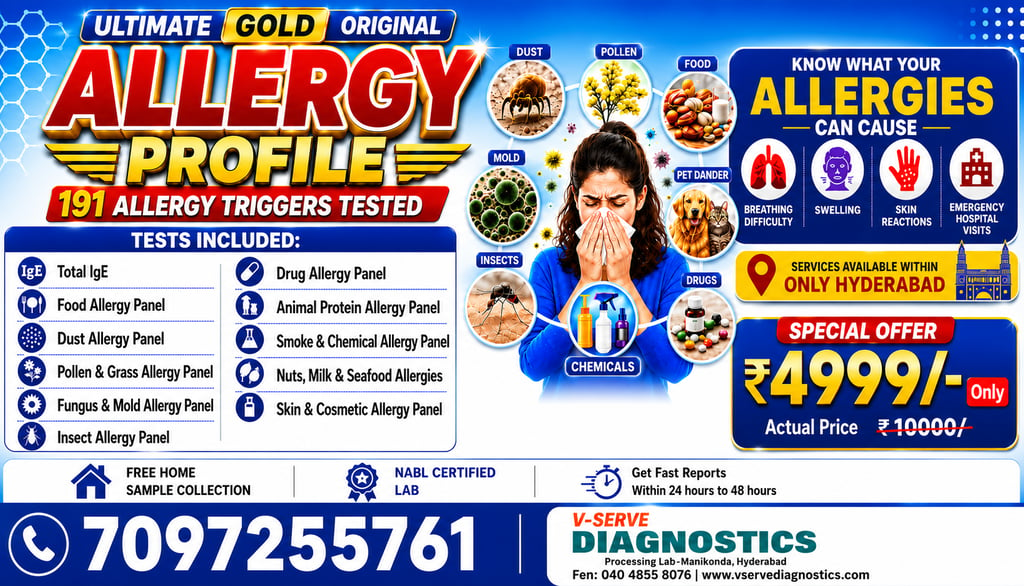
What Is Included in the 191-Trigger Allergy Profile?
The Ultimate Gold Original Allergy Profile at V-Serve Diagnostics covers 11 complete allergy panels:
1. Total IgE
Measures your total allergy antibody load. Elevated levels confirm allergic disease and guide interpretation of specific panel results.
2. Food Allergy Panel
Tests reactions to the most common food allergens including nuts, wheat, dairy, eggs, soy, fish, and shellfish. Identifies food-specific IgE to trace the exact ingredient causing your reaction.
3. Dust Allergy Panel
Screens for sensitization to house dust mites and dust-related allergens. Critical for people with chronic indoor allergy symptoms in Hyderabad homes.
4. Pollen and Grass Allergy Panel
Tests reactions to specific tree pollens, grass pollens, and weed pollens prevalent in Telangana and South India. Identifies your seasonal triggers.
5. Fungus and Mold Allergy Panel
Screens for reactions to common mold species. Especially relevant during monsoon season in Hyderabad when indoor mold levels rise significantly.
6. Insect Allergy Panel
Tests reactions to dust mites (as insects), mosquito saliva, bee/wasp venom, and cockroach proteins. Cockroach allergen is a major indoor trigger in urban households.
7. Drug Allergy Panel
Identifies IgE-mediated reactions to common medications including penicillin-group antibiotics, aspirin, and other frequently prescribed drugs. Medically important before surgery or complex treatments.
8. Animal Protein Allergy Panel
Screens reactions to proteins from dogs, cats, horses, rabbits, and other animals. Useful for pet owners and anyone regularly exposed to animals.
9. Smoke and Chemical Allergy Panel
Tests reactions to chemicals, industrial compounds, tobacco smoke, and environmental pollutants. Relevant for occupational allergy assessment in Hyderabad's industrial and commercial workers.
10. Nuts, Milk, and Seafood Allergies
A focused panel on the three most severe food allergy categories. Nut allergies in particular carry anaphylaxis risk and must be identified early.
11. Skin and Cosmetic Allergy Panel
Tests reactions to nickel, latex, fragrances, preservatives, and other contact allergens commonly found in jewelry, beauty products, and household materials.
Benefits of Early Allergy Detection
Detecting allergies early changes your health outcomes significantly:
Prevents escalation. Unmanaged allergic rhinitis progresses to sinusitis, asthma, and ear infections. Early detection and avoidance slow this progression.
Reduces emergency visits. Knowing food and drug allergies prevents accidental exposure. This is the single most effective way to reduce allergy-related emergency hospital admissions.
Improves quality of life. Sleep improves when nasal allergens are identified. Energy levels rise when chronic inflammation is reduced. Daily comfort improves across all areas.
Guides treatment. Your doctor prescribes targeted antihistamines or immunotherapy based on your specific IgE results rather than trial-and-error prescribing.
Informs diet and lifestyle. Knowing food triggers lets you make precise dietary changes without unnecessary restriction.
Protects children's development. Allergic disease in children affects sleep, school performance, and physical activity. Early identification and management removes these barriers.
Why Allergy Symptoms Are Often Misdiagnosed
Allergy symptoms mimic multiple other conditions. This is the core reason so many people spend years without a correct diagnosis:
Allergic rhinitis is routinely treated as recurrent upper respiratory infection
Food allergy is mistaken for irritable bowel syndrome or acid reflux
Eczema is treated as dry skin without investigating allergen triggers
Allergic asthma is managed without ever testing for the underlying allergen
Drug reactions are assumed to be side effects rather than immune responses
Pet allergy is overlooked because symptoms build gradually over weeks
A comprehensive allergy blood test removes guesswork. It gives your doctor objective IgE data against 191 triggers, enabling accurate diagnosis on the first attempt.
Difference Between Allergy, Cold, and Sinus Infection
Many patients in Hyderabad ask this question because all three conditions share overlapping symptoms. Here is how to distinguish them:
Feature Allergy Cold Sinus Infection Duration Weeks to months 7 to 10 days 10 days or more Nasal discharge Clear, watery Starts clear, turns yellow Thick, yellow or green Fever None Low-grade possible Often present Itching (eyes, nose) Common Uncommon Uncommon Seasonal pattern Often seasonal Any time Often follows cold Body aches None Common Sometimes Onset Gradual with exposure Gradual, after virus contact Follows cold or respiratory infection
If your symptoms are clear and watery, season-dependent, and accompanied by itching, an allergy profile test is a more appropriate first step than repeated antibiotic courses.
When Should You See a Doctor for Allergies?
See a doctor immediately if you experience:
Throat tightening or difficulty swallowing after eating
Sudden shortness of breath or severe wheezing
Widespread hives combined with facial swelling
Loss of consciousness or extreme lightheadedness after allergen exposure
Vomiting combined with breathing difficulty
These are symptoms of anaphylaxis, a severe allergic reaction requiring emergency treatment.
Schedule a consultation with your doctor if you have:
Allergy symptoms lasting more than two weeks
Over-the-counter antihistamines no longer controlling your symptoms
Asthma that is worsening despite medication
Repeated skin rashes without an identified cause
A child whose growth, sleep, or school performance is affected by chronic symptoms
Getting an allergy profile test before your consultation gives your doctor the data needed to act decisively at the first appointment.
Benefits of Choosing a NABL-Certified Lab for Allergy Testing
NABL (National Accreditation Board for Testing and Calibration Laboratories) certification is India's highest quality standard for diagnostic laboratories.
V-Serve Diagnostics is NABL certified. This means:
Test methods meet national and international quality benchmarks
Equipment is calibrated and audited regularly
Results are reproducible and medically defensible
Your report is accepted by doctors, specialists, and insurance providers across India
For an allergy profile with 191 markers, the accuracy of each result matters. NABL certification ensures you receive clinically reliable data, not approximations.
Frequently Asked Questions
Q1. What is the price of the allergy test in Hyderabad at V-Serve Diagnostics?
The 191-trigger Ultimate Gold Original Allergy Profile is available at a special offer price of ₹4,999 against the actual price of ₹10,000. This is a comprehensive panel covering 11 allergy categories in a single test.
Q2. How many allergy triggers are tested in this profile?
191 allergy triggers across 11 panels including food, dust, pollen, mold, insects, drugs, animal proteins, chemicals, smoke, nuts and seafood, and skin and cosmetic allergens.
Q3. Is fasting required before the allergy blood test?
Fasting is generally not required. However, confirm with the V-Serve team when you book your appointment, as specific panel additions may vary.
Q4. Is home sample collection available for this test?
Yes. V-Serve Diagnostics offers free home sample collection across Hyderabad. A trained phlebotomist visits your home at your scheduled time.
Q5. How long does it take to receive results?
Reports are delivered within 24 to 48 hours of sample collection.
Q6. Is the allergy blood test safe for children?
Yes. The allergy blood test is safe for children of all ages. It involves a small blood draw only, with no allergen exposure during the test.
Q7. What is the difference between an allergy blood test and a skin prick test?
A skin prick test introduces small amounts of allergens into the skin to observe a reaction. It requires stopping antihistamines before the test and carries a small risk of reaction. An allergy blood test measures IgE antibodies in a blood sample, requires no allergen exposure, and is not affected by antihistamine use.
Q8. What is Total IgE and what does it mean?
Total IgE is a measure of all allergy antibodies in your blood. Elevated total IgE confirms allergic sensitization and guides interpretation of specific allergen results.
Q9. I have had allergies for years. Is it too late to test?
No. Allergy testing is useful at any stage. Knowing your specific triggers allows targeted treatment and avoidance, even if you have had symptoms for decades.
Q10. Will this test diagnose food intolerance?
This test measures IgE-mediated food allergies, not food intolerance. Food intolerance involves different mechanisms and requires separate testing. Your doctor can advise if additional testing is needed.
Q11. How do I prepare for the home sample collection?
Stay hydrated before the appointment. Wear a loose-sleeved top for easy blood draw access. Have your doctor's prescription or your test booking confirmation ready. Inform the lab team of any current medications.
Q12. Does this test cover drug allergies?
Yes. The Drug Allergy Panel within the 191-trigger profile tests for IgE-mediated reactions to common medications. This is especially important before planned surgeries or new prescriptions.
Q13. I live in the outskirts of Hyderabad. Does the service cover my area?
V-Serve Diagnostics serves Hyderabad. Contact 7097255761 on call or WhatsApp to confirm whether free home sample collection covers your specific location.
Q14. What happens after I get my allergy test report?
Take your report to your doctor or an allergist. The specific IgE values against each allergen guide your doctor in prescribing antihistamines, corticosteroids, or allergen immunotherapy as appropriate.
Q15. Can allergies go away on their own?
Some allergies, particularly in children, reduce over time. Others persist for life. Without testing, you cannot know your current sensitization status. Annual or biennial allergy profiling helps track changes over time.
Q16. Is there a difference between skin allergy and food allergy in terms of testing?
Both involve IgE antibodies but different allergen triggers. Skin allergy panels test contact allergens. Food allergy panels test ingested allergens. The 191-trigger profile covers both in a single blood draw.
Q17. Is V-Serve Diagnostics accredited?
V-Serve Diagnostics is a NABL-certified laboratory based in Manikonda, Hyderabad. NABL accreditation confirms the lab meets national quality and accuracy standards for diagnostic testing.
Conclusion
If you have been managing allergy symptoms without knowing their cause, you are treating the symptom and ignoring the source.
A single blood test covering 191 allergy triggers gives you the complete picture. You learn what triggers your immune response, at what level, and across which categories. Your doctor then has the data to prescribe targeted treatment rather than cycling through medications that address symptoms but not causes.
V-Serve Diagnostics in Hyderabad makes this process simple. The test covers every major allergy category in one draw. Free home sample collection removes the need to travel. The NABL-certified processing ensures accuracy. Reports arrive within 24 to 48 hours.
At ₹4,999, the 191-trigger allergy profile replaces months of trial-and-error consultations. It is the most direct route from recurring symptoms to actionable answers.
Book Your Allergy Test Today
Stop guessing. Know your triggers.
Call or WhatsApp V-Serve Diagnostics directly to book your test or schedule free home sample collection:
Phone: 7097255761 WhatsApp: wa.me/917097255761 Website: vservediagnostics.in
Special offer price: Rs. 4,999 (actual price Rs. 10,000). Service available within Hyderabad only.