Advance Fever Profile Hyderabad — Dengue, Malaria & Typhoid Test at ₹1499 | Free Home Collection
Fever lasting more than 2 days? Get the Advance Fever Profile in Hyderabad for ₹1499. Tests for Dengue NS1, IgM, IgG, Malaria, Typhoid, CBC, CRP & more. Free home sample collection. NABL certified. Reports in 8–12 hours.
6/11/202630 min read
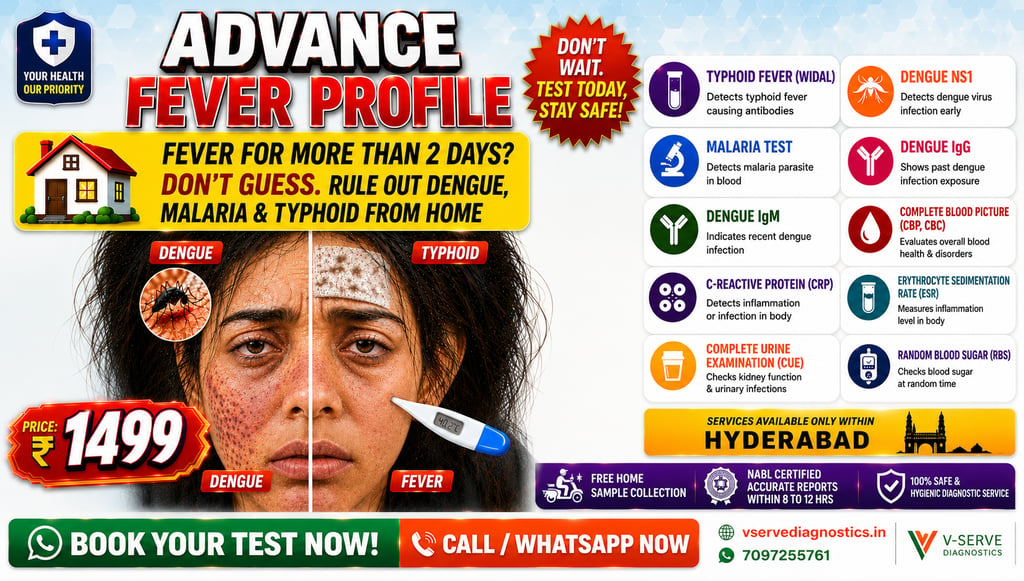

Fever for More Than 2 Days in Hyderabad? Get the Advance Fever Profile — Dengue, Malaria & Typhoid Test at ₹1499
A Fever That Won't Break Is Your Body Asking for Answers
Day one of a fever — you take a paracetamol, rest, and assume you will feel better by tomorrow. Day two — still running a temperature. You try another tablet. Day three — the fever persists. You are tired, your body aches, your appetite is gone, and now there is a quiet, creeping worry that this is something more than the seasonal flu.
This is the moment when most families in Hyderabad face a choice: wait and see, or get tested.
Waiting is the more dangerous option — and here is why.
Dengue, malaria, and typhoid are three of the most common serious infections in Hyderabad. They are also three infections that begin with symptoms almost identical to a routine viral fever — high temperature, body aches, fatigue, and loss of appetite. In the early days, there is no way to tell them apart without targeted laboratory testing. And all three of them can progress to serious complications — sometimes rapidly — if left unidentified and untreated.
The Advance Fever Profile at V-Serve Diagnostics exists for exactly this situation. A comprehensive 10-test panel that covers dengue (NS1, IgM, and IgG), malaria, typhoid, complete blood count, inflammation markers, urine analysis, and blood sugar — all from a single blood draw, at your home, with reports delivered within 8 to 12 hours.
Price: ₹1,499. Free home sample collection. NABL certified. 100% safe and hygienic.
If you have had a fever for more than two days, this article will tell you everything you need to know — about why you should not wait, what these diseases do to the body, how each test works, and how to get answers today without leaving home.
Why Fever Should Never Be Ignored After 2 Days
The human body uses fever as a primary defence mechanism. When the immune system detects an invasion — whether a virus, bacterium, or parasite — it raises the body's core temperature to create a hostile environment for the invading organism. In this sense, a fever is not the enemy. It is the alarm system.
A fever lasting one day is usually not a cause for concern. Many viral infections trigger a brief temperature spike that resolves within 24 to 48 hours as the immune system gains the upper hand.
A fever lasting beyond 48 hours tells a different story.
When a fever persists past two days — especially when accompanied by symptoms like severe body aches, rash, chills, headache, or nausea — it suggests that the immune system has encountered something it cannot resolve quickly. This is the threshold at which medical guidance and laboratory investigation become genuinely necessary.
The concern is not just the fever itself. Undiagnosed dengue can cause platelet levels to crash within days. Untreated malaria — particularly Plasmodium falciparum malaria, which is the more dangerous species — can progress to cerebral malaria within 24 to 72 hours of becoming severe. Untreated typhoid can lead to intestinal perforation — a life-threatening surgical emergency — in the third or fourth week of illness.
None of these outcomes are inevitable. All of them are dramatically less likely when the infection is identified and treated early.
A persistent fever is not a reason to panic. It is a reason to get tested.
Understanding Fever: What Your Body Is Trying to Tell You
Fever is a highly conserved biological response — found in virtually all vertebrates and many invertebrates — because it works. The elevated temperature:
Directly inhibits the replication of many viruses and bacteria
Activates and accelerates immune cell function
Enhances the production of antibodies
Reduces the availability of iron and zinc — nutrients that many pathogens require for growth
A normal body temperature ranges from 36.1°C to 37.2°C (97°F to 99°F). Fever is generally defined as a temperature above 38°C (100.4°F).
Temperature ranges and clinical significance:
Temperature Classification Action 37.3°C – 37.9°C Low-grade fever Monitor; stay hydrated 38°C – 38.9°C Moderate fever Rest; consider medical consultation if persisting 39°C – 40°C High fever Medical evaluation warranted Above 40°C Very high fever Prompt medical attention required Above 41°C Hyperpyrexia Medical emergency
The temperature alone, however, does not tell you what is causing the fever. That is where targeted laboratory testing becomes essential.
Common Causes of Persistent Fever
Not every prolonged fever is dengue, malaria, or typhoid. But in Hyderabad — particularly during and after the monsoon season when mosquito populations are at their peak — these three infections account for a significant proportion of fever presentations that persist beyond two days.
Other common causes of fever lasting more than 48 hours include:
Bacterial infections — urinary tract infections, respiratory tract infections, skin infections
Viral infections — influenza, COVID-19, Epstein-Barr virus (glandular fever), chikungunya
Parasitic infections — malaria (multiple species)
Enteric fever — typhoid and paratyphoid
Arboviral infections — dengue, Zika, chikungunya
Autoimmune conditions — can present with fever as a component
Less common — tuberculosis (TB), endocarditis, abscesses
The Advance Fever Profile is specifically designed to rule in or rule out the most common and most clinically significant causes of persistent fever in Hyderabad — dengue, malaria, and typhoid — while simultaneously assessing the inflammatory response, blood composition, urinary tract health, and blood sugar.
Dengue, Malaria, and Typhoid: Why These Diseases Are Often Confused
This is one of the most clinically important points about fever management in Hyderabad — and one that most people are not aware of.
Dengue, malaria, and typhoid share a remarkably similar early symptom profile:
Symptom Dengue Malaria Typhoid High fever ✓ ✓ ✓ Severe headache ✓ ✓ ✓ Body / muscle aches ✓ ✓ ✓ Fatigue and weakness ✓ ✓ ✓ Nausea / vomiting ✓ ✓ ✓ Chills Sometimes ✓ (cyclical) Sometimes Abdominal discomfort Sometimes Sometimes ✓ Rash ✓ (days 3–5) Rare Sometimes Joint / eye pain ✓ Rare Rare
In the first 24 to 72 hours, it is clinically impossible to distinguish between these three infections based on symptoms alone — even for an experienced physician. This is not a limitation of medical skill. It is a fundamental property of how these diseases present in their early stages.
The practical consequence: a doctor who examines a patient with two days of high fever, body aches, and nausea cannot — without laboratory data — tell you with confidence whether you have dengue, malaria, typhoid, or simply a severe viral fever. They can make an educated guess based on the season and local disease prevalence, but a guess is not a diagnosis.
Only a targeted fever profile blood test gives you actual answers.
What Makes the Advance Fever Profile Unique
Most standard fever tests available at diagnostic centres in Hyderabad test only one or two infections — typically just dengue or just typhoid. The patient may need to visit multiple times, order separate tests, and wait different durations for different results.
The Advance Fever Profile at V-Serve Diagnostics consolidates everything into one comprehensive 10-test panel, specifically designed to:
Simultaneously rule out the three most common serious fever causes in Hyderabad
Assess the body's inflammatory response at the same time
Evaluate blood composition — which is directly affected by all three infections
Check kidney and urinary tract health — often affected during severe fever
Monitor blood sugar — which can be destabilised by serious infections
Everything from a single blood sample. Results in 8–12 hours. At home.
Complete List of Tests Included
Test What It Detects Dengue NS1 Antigen Active dengue virus infection (early detection) Dengue IgM Antibody Recent dengue infection Dengue IgG Antibody Past dengue exposure or secondary infection Malaria Test Presence of malaria parasites in blood Typhoid Fever (Widal) Salmonella typhi and paratyphi antibodies Complete Blood Picture (CBP/CBC) Overall blood health — RBC, WBC, platelets C-Reactive Protein (CRP) Degree of infection/inflammation ESR (Erythrocyte Sedimentation Rate) Inflammation marker Complete Urine Examination (CUE) Kidney, urinary tract health Random Blood Sugar (RBS) Current blood glucose level
All 10 tests: ₹1,499 | Free home sample collection | NABL certified | Reports in 8–12 hours
Dengue NS1 Antigen — Early Detection Before Antibodies Form
What Is Dengue NS1?
NS1 stands for Non-Structural Protein 1 — a protein produced in large quantities by the dengue virus during active replication inside the patient's body. The NS1 antigen test detects this viral protein directly in the blood, making it the earliest available laboratory marker for active dengue infection.
Why NS1 Is the Most Critical Early Dengue Test
The dengue NS1 antigen appears in the bloodstream within day 1 to day 5 of fever onset — before the body has had time to produce detectable antibodies. During this critical early window, the NS1 test is the only reliable blood marker for dengue confirmation.
After day 5 or 6 of fever, NS1 levels begin to decline as the immune system produces antibodies (IgM and IgG) that neutralise the virus. At this stage, antibody tests (IgM and IgG) become the primary diagnostic tools.
This is why the timing of dengue testing matters enormously: a patient tested on Day 2 of fever should be tested using NS1. A patient tested on Day 7 may need IgM as the primary marker, with NS1 becoming less sensitive.
The Advance Fever Profile includes all three dengue markers (NS1, IgM, IgG) — ensuring accurate dengue detection regardless of which day of illness the patient presents.
Can Dengue Be Detected Before Platelets Drop?
Yes — and this is one of the most important reasons to test early. The notorious platelet drop associated with dengue typically occurs between Day 4 and Day 7 of illness. By the time platelets begin falling, the infection is already in its critical phase.
The NS1 antigen test can detect dengue on Day 1 or Day 2 — days before platelet counts begin to decline. Early identification allows:
Immediate medical supervision and monitoring
Adequate hydration protocols
Avoidance of medications that thin the blood (aspirin, NSAIDs)
Preparation for potential platelet management if needed
Waiting until platelets drop to confirm dengue is dangerous. NS1 testing eliminates that wait.
Dengue IgM Antibody — The Recent Infection Marker
What Is Dengue IgM?
IgM (Immunoglobulin M) is the first class of antibody the immune system produces when it encounters a new infection. In dengue, IgM antibodies appear in the blood approximately 4 to 5 days after fever onset and remain detectable for 2 to 3 months.
A positive Dengue IgM result indicates:
Active or very recent dengue infection
Primary dengue infection (first-time exposure to the dengue virus)
Why IgM Matters After Day 4
For patients who present with fever on Day 5, 6, or 7 — when NS1 sensitivity is declining — the IgM test becomes the primary diagnostic marker. Together, NS1 and IgM cover the full acute phase of dengue illness.
A positive IgM with a negative NS1 in a patient with 5–7 days of fever is a pattern strongly consistent with dengue fever and warrants immediate medical evaluation and monitoring.
Dengue IgG Antibody — Past Exposure and Secondary Infection Risk
What Is Dengue IgG?
IgG (Immunoglobulin G) is the long-term antibody produced after an infection — or after the initial IgM response matures. In dengue, IgG appears approximately 7 to 10 days after primary infection and can persist for years or decades.
The Dengue IgG result serves two important clinical purposes:
1. Confirming past dengue exposure: A positive IgG with a negative IgM typically indicates past dengue infection — useful for understanding immune history.
2. Identifying secondary dengue infection — which is more dangerous: When a person who was previously infected with one dengue serotype is infected again with a different serotype, they are at significantly elevated risk for Dengue Hemorrhagic Fever (DHF) and Dengue Shock Syndrome (DSS) — the severe forms of dengue with much higher complication rates.
A patient with a positive IgG and a positive IgM simultaneously is likely experiencing a secondary dengue infection — a finding that significantly changes the clinical risk profile and management approach.
This is why testing IgG alongside IgM and NS1 is not redundant — it provides critical information about infection severity risk that neither test alone can provide.
Malaria Test — Detecting the Parasite in the Blood
How Is Malaria Diagnosed? What Is a Malaria Blood Test?
Malaria is caused by Plasmodium parasites transmitted through the bite of infected female Anopheles mosquitoes. In Hyderabad, the two species most commonly responsible for malaria are Plasmodium vivax (the more common, less immediately dangerous species) and Plasmodium falciparum (the more dangerous species capable of causing cerebral malaria).
The malaria test detects the presence of Plasmodium parasites in the blood. Modern malaria testing uses one or both of the following methods:
Rapid Diagnostic Test (RDT) — detects malaria-specific antigens or antibodies quickly
Peripheral Blood Smear (Thick and Thin Smear) — microscopic examination of blood cells under a trained microscopist
What Are Malaria Symptoms?
The hallmark of malaria is cyclical fever — a pattern of chills, fever, and sweating that repeats every 48 hours (in vivax and ovale malaria) or every 72 hours (in malariae malaria). However, this classic pattern is not always obvious, particularly in the early days.
Common malaria symptoms:
High fever, often reaching 40°C or above
Severe chills and shaking (rigors)
Profuse sweating as fever breaks
Intense headache
Muscle aches and joint pain
Nausea, vomiting
Fatigue and weakness
Anaemia (in prolonged or severe infection)
Can Malaria Become Serious If Ignored?
Plasmodium falciparum malaria is one of the most dangerous infectious diseases in the world. If not identified and treated promptly, falciparum malaria can progress to:
Cerebral malaria — infected red blood cells block cerebral blood flow, causing seizures, loss of consciousness, and potentially death
Severe anaemia — from rapid destruction of red blood cells
Respiratory distress
Kidney failure
Multi-organ failure
Falciparum malaria can progress from mild fever to life-threatening severity within 24 to 72 hours in untreated cases. Early malaria testing — at the first sign of cyclical or persistent fever with chills — is not optional. It is potentially life-saving.
Vivax malaria, while less immediately dangerous, can cause recurring relapses for months or years if the liver-stage parasites (hypnozoites) are not treated with specific antirelapse medication (primaquine). Identifying the species through accurate testing allows species-specific treatment.
Typhoid Fever (Widal) — Detecting the Bacteria Behind Enteric Fever
What Is the Widal Test? How Accurate Is a Typhoid Blood Test?
Typhoid fever is caused by Salmonella typhi (typhoid) and occasionally by Salmonella paratyphi (paratyphoid). These bacteria enter the body through contaminated food and water — making typhoid a disease strongly associated with poor water sanitation and food hygiene, both of which remain challenges in many parts of Hyderabad.
The Widal test detects antibodies (agglutinins) produced by the body against the O (somatic) and H (flagellar) antigens of Salmonella typhi and paratyphi. Rising antibody titres — measured through serial testing — indicate active typhoid infection.
Interpretation:
A single titre of 1:160 or above for O antigen is generally considered significant in unvaccinated individuals
A fourfold rise in titre between two samples taken 7 to 10 days apart provides the most reliable confirmation
Titres must be interpreted in the context of clinical symptoms and local disease prevalence
Limitations of the Widal test: The Widal test has recognised limitations — false positives can occur in people who have previously had typhoid or typhoid vaccination, and false negatives can occur in the first week of illness before antibodies have risen to detectable levels. This is why Widal results must always be interpreted alongside the clinical picture, CBC findings, and the patient's history.
How Do I Know If I Have Typhoid?
Typhoid fever presents in a characteristic progression:
Week 1:
Gradually rising fever — often reaching 39°C to 40°C by the end of the week
Severe headache
General malaise and weakness
Constipation in adults (diarrhoea more common in children)
Dry cough
Mild abdominal discomfort
Week 2:
Sustained high fever (often described as "plateau fever" — consistently high rather than spiking and dropping)
"Rose spots" — faint pink spots on the trunk in some patients
Abdominal distension and tenderness
Splenomegaly (enlarged spleen)
Bradycardia relative to the degree of fever (slow heart rate despite high temperature — a clinical clue)
Week 3 onwards (if untreated):
Risk of serious complications including intestinal perforation, haemorrhage, hepatitis, and encephalopathy
Can Typhoid Cause Complications?
Untreated typhoid is a dangerous disease. In the pre-antibiotic era, typhoid carried a mortality rate of 10–30%. With modern antibiotics started promptly, this drops to well below 1%. But complications from untreated or late-treated typhoid are still seen in Hyderabad:
Intestinal perforation — the most feared complication; requires emergency surgery
Intestinal haemorrhage — internal bleeding from ulcers in the small intestine
Hepatitis and elevated liver enzymes — common in typhoid
Myocarditis — inflammation of the heart muscle
Typhoid encephalopathy — neurological involvement in severe cases
Relapse — occurs in 5–10% of patients even after treatment; Widal testing helps monitor recovery
The message is straightforward: early identification through Widal testing allows prompt antibiotic treatment that prevents all of these complications.
Complete Blood Picture (CBP/CBC) — The Essential Blood Health Map
What Is a CBC Test? What Does It Show During Fever?
The Complete Blood Picture (also called CBC — Complete Blood Count) is one of the most informative tests available, providing a comprehensive snapshot of all major blood cell populations. During a fever illness, the CBC provides critical information that helps distinguish between different types of infection and assess disease severity.
What the CBC measures:
Red Blood Cells (RBC):
Count, size, and haemoglobin — evaluates for anaemia, which can result from malaria (where the parasite destroys red cells) and chronic typhoid infection
White Blood Cells (WBC) with differential:
Total WBC count — elevated in bacterial infections; often normal or low in viral infections and dengue
Neutrophils — elevated in bacterial infections including typhoid
Lymphocytes — elevated in viral infections
Eosinophils — may be elevated in parasitic infections
Platelets:
The most critical CBC parameter in dengue — platelet count drops significantly in dengue, typically between Day 4 and Day 7 of illness. Monitoring platelet trajectory is central to dengue management.
What specific CBC patterns suggest in fever:
Pattern What It Suggests Low WBC + Low Platelets Strongly suggests dengue Elevated WBC (neutrophils) Bacterial infection — typhoid, secondary infection Normal WBC + Anaemia Malaria (red cell destruction) Very low platelets (<50,000) Severe dengue — requires urgent medical attention Elevated lymphocytes Viral fever
The CBC is indispensable in fever management — not just as a diagnostic aid but as a monitoring tool that tells doctors how rapidly a patient is deteriorating or recovering.
C-Reactive Protein (CRP) — Measuring the Degree of Infection
What Is a CRP Test?
C-Reactive Protein is a protein produced by the liver in response to inflammation and infection. When the body is fighting an infection, the liver rapidly ramps up CRP production — and blood levels can rise 1,000-fold or more within 24 to 48 hours of the onset of significant infection.
Why CRP is essential in fever evaluation:
1. Quantifying infection severity: CRP levels correlate roughly with the severity of infection. Mild viral infections typically produce modest CRP elevation (10–40 mg/L). Severe bacterial infections can drive CRP above 100 mg/L or even 200 mg/L. This gives clinicians an objective measure of how seriously the body is fighting an infection.
2. Distinguishing bacterial from viral infections: While not absolute, CRP tends to be significantly more elevated in bacterial infections than in viral infections at comparable stages of illness. In a patient with fever where the cause is uncertain, a CRP above 100 mg/L raises concern for bacterial disease and may guide antibiotic decisions.
3. Monitoring treatment response: CRP falls rapidly when an infection is being successfully treated. A declining CRP over serial measurements confirms that the antibiotic or antiviral treatment is working. A CRP that remains elevated or rises despite treatment signals that the infection is not responding — prompting medication review.
In the context of the Advance Fever Profile, CRP provides the inflammation dimension that specific disease tests cannot — telling the clinician not just what infection is present, but how severely the body is reacting to it.
ESR — The Inflammation Gauge
What Is ESR?
Erythrocyte Sedimentation Rate (ESR) measures how quickly red blood cells settle in a standardised tube over one hour. When significant inflammation or infection is present in the body, blood proteins (particularly fibrinogen) increase and cause red cells to clump and settle faster — producing an elevated ESR.
What elevated ESR during fever indicates:
Active infection — bacterial, viral, or parasitic
Significant systemic inflammation
Active autoimmune disease
Certain cancers (when fever is a presenting symptom of lymphoma or leukaemia)
ESR vs CRP — complementary roles: CRP rises and falls faster than ESR, making CRP a better marker for acute infection severity. ESR changes more slowly and more linearly — making it useful for monitoring the trajectory of infection over days to weeks. Using both together gives a more complete picture of the inflammatory response than either alone.
In fever that is prolonged — lasting more than a week — an elevated ESR alongside specific disease markers helps confirm that a genuine systemic infection (rather than a simple self-limiting viral illness) is present.
Complete Urine Examination (CUE) — Why Urine Testing Matters During Fever
Why Is Urine Testing Important During Fever?
Many patients are surprised to find a urine test included in a fever profile. The reasons are clinically important and multiple.
1. Urinary tract infections as a cause of fever: Urinary tract infections (UTIs) are a common cause of fever — particularly in women. A UTI presenting with fever but without prominent urinary symptoms can be mistaken for a viral illness or early dengue. The CUE identifies the elevated white cells, bacteria, and nitrites characteristic of UTI — allowing prompt antibiotic treatment.
2. Kidney involvement in dengue, malaria, and typhoid: All three of the major infections tested in this panel can affect the kidneys:
Dengue can cause acute kidney injury in severe cases — detectable through protein and blood in the urine
Malaria (particularly falciparum) can cause "blackwater fever" — massive haemolysis with haemoglobin appearing in the urine — and acute kidney failure
Typhoid can cause proteinuria and mild renal involvement
Identifying kidney involvement early allows appropriate fluid management and monitoring that prevents progression to renal failure.
3. Blood sugar in the urine: Glucose in the urine can indicate undiagnosed or poorly controlled diabetes — which is relevant because diabetic patients are at higher risk of complications from any of the infections in this panel.
4. Hydration assessment: Concentrated, dark urine with high specific gravity indicates dehydration — a critical concern in fever management, where fluid losses through sweating are significant and fluid intake is often reduced. The CUE provides a simple hydration assessment that guides clinical advice.
Random Blood Sugar (RBS) — Monitoring Glucose During Fever
What Is the Random Blood Sugar Test? Can Fever Affect Blood Sugar?
Random Blood Sugar (RBS) measures blood glucose at any time of day, regardless of when the patient last ate. It provides an immediate snapshot of current blood glucose status.
Why RBS matters during fever illness:
1. Fever and blood sugar instability: Fever and infection trigger a stress hormone response — releasing cortisol and adrenaline that raise blood glucose through gluconeogenesis and glycogen breakdown. In people with undiagnosed pre-diabetes or diabetes, this stress hyperglycaemia can push blood sugar to dangerously high levels. Conversely, poor appetite and reduced oral intake during illness — combined with certain medications — can cause blood sugar to drop.
Both hypo- and hyperglycaemia are dangerous complications of serious infection in susceptible individuals.
2. Identifying undiagnosed diabetes: A proportion of patients who present with fever have undiagnosed diabetes. Infections — including dengue and typhoid — can unmask diabetes by causing blood sugar to rise dramatically. An RBS above 200 mg/dL in a symptomatic individual meets the threshold for diabetes diagnosis. Identifying this during a fever workup allows prompt referral and management.
3. Risk stratification: Diabetics with dengue, malaria, or typhoid are at higher risk of complications than non-diabetics. Knowing a patient's blood sugar status — even a random measurement — helps clinicians assess overall risk and management requirements.
Symptoms That Require Immediate Fever Testing
The following symptom combinations warrant same-day testing — not observation, not waiting:
Fever above 38.5°C persisting beyond 48 hours without a clear obvious cause
High fever accompanied by intense headache behind the eyes (classic dengue — "breakbone fever")
Fever with rigors — extreme shaking chills followed by sweating (classic malaria pattern)
Fever with a skin rash appearing 3–5 days into illness (dengue rash)
Fever with severe abdominal pain or tenderness (typhoid risk)
Fever with bleeding from gums, nose, or blood in urine/stool (severe dengue warning signs)
Fever with confusion, disorientation, or loss of consciousness (emergency — cerebral malaria or severe dengue)
Fever in a child that does not break with paracetamol and persists beyond 24 hours
Fever in anyone returning from a high-malaria-risk area within the past 30 days
Fever in a diabetic, elderly, or immunocompromised person lasting more than 24 hours
When Should Adults Get Tested?
Adults should seek fever testing when:
Fever persists beyond 48 hours without an obvious cause
Temperature exceeds 39°C at any point
Symptoms include severe headache, muscle aches, rash, or chills beyond what a simple viral illness produces
There is a known active dengue or malaria outbreak in their locality in Hyderabad
They have been in areas with standing water — construction sites, waterlogged areas — where Aedes mosquito breeding is likely
A family member or colleague in the same locality has been recently diagnosed with dengue or malaria
They develop any warning signs listed above
When Should Children Get Tested?
Children are at higher risk of rapid deterioration during dengue, malaria, and typhoid — and their fevers should be evaluated more aggressively than in healthy adults.
Test a child when:
Fever lasts more than 24 hours and does not respond well to paracetamol
The child is lethargic, refuses to eat or drink, or is unusually difficult to arouse
The child develops a rash during a fever
The child shows any bleeding — nosebleed, bleeding gums, or blood in urine
The child reports pain behind the eyes or severe headache
Fever is accompanied by vomiting that prevents oral fluid intake
The child develops abdominal pain during the fever
Dehydration occurs more rapidly in children. Dengue and malaria progress faster in paediatric patients. Early testing and early medical supervision are essential.
When Should Senior Citizens Get Tested?
Senior citizens should have a lower threshold for fever testing than younger adults because:
The immune response in elderly patients is less robust — fevers may be lower despite significant infection
Age-related changes in kidney function mean organ complications develop faster
Pre-existing conditions (diabetes, hypertension, heart disease) increase complication risk dramatically
Medications commonly used by elderly patients (especially blood thinners) interact adversely with dengue-related platelet drops
Confusion or altered mental state in elderly fever patients can be a sign of cerebral malaria or severe dengue — and may be misattributed to other causes
Fever in a senior citizen persisting beyond 24 hours warrants testing. The Advance Fever Profile's home sample collection service is particularly valuable for elderly patients who find travel to a diagnostic centre difficult or risky.
Warning Signs That Need Urgent Medical Attention
The following are red flags requiring immediate hospital evaluation, not just testing — call for emergency medical assistance if any of these appear during a fever illness:
🚨 Sudden drop in consciousness or confusion 🚨 Severe abdominal pain, especially right upper quadrant or diffuse 🚨 Bleeding from any site — gums, nose, urine, stool, skin bruising without injury 🚨 Difficulty breathing or rapid breathing 🚨 Persistent vomiting preventing any fluid intake 🚨 Cold, clammy skin with a weak rapid pulse (shock) 🚨 Fever in a child with seizures 🚨 Extremely low platelet count (below 20,000 on a CBC) 🚨 Blood in urine turning very dark or cola-coloured (possible blackwater fever in malaria)
These are not situations for home management. They require hospital-level care. Testing at home is appropriate for initial diagnosis in stable patients — but these warning signs indicate the patient may already be in a critical phase.
How Blood Tests Help Doctors Identify the Cause of Fever
A doctor examining a patient with high fever and body aches has a limited diagnostic toolkit at the bedside — history, physical examination, and pattern recognition. These are valuable — but they are not sufficient to definitively identify a specific infectious cause.
Blood tests transform the diagnostic process in several critical ways:
1. Confirmation vs clinical suspicion: A clinician can suspect dengue based on the symptom pattern — but the NS1 or IgM test either confirms or rules it out definitively. This changes treatment from empirical (guessing) to targeted (confirmed).
2. Severity assessment: The platelet count and CRP together tell a clinician how severe the infection is and how quickly the patient may deteriorate — information that shapes decisions about hospital admission versus home monitoring.
3. Species identification in malaria: The malaria blood test identifies not just whether malaria is present, but which species — which directly determines the choice of treatment (chloroquine for vivax vs artemisinin-based combination therapy for falciparum, plus primaquine for vivax relapse prevention).
4. Ruling out concurrent infections: In Hyderabad's monsoon season, it is not uncommon for a patient to have typhoid and a secondary bacterial UTI simultaneously. The comprehensive panel identifies all contributing infections in a single workup.
5. Baseline for monitoring: An initial CBC provides the platelet and WBC baseline from which all subsequent measurements are compared — essential for tracking dengue progression.
Common Fever Myths People Still Believe
Myth 1: "If the fever breaks with paracetamol, it is not serious." Paracetamol reduces fever temporarily regardless of the cause. Dengue, malaria, and typhoid all typically respond to paracetamol with a temporary temperature reduction. The fever returns as the drug wears off. Fever breaking briefly is not evidence that the cause is benign.
Myth 2: "Dengue only happens in heavily waterlogged areas." The Aedes aegypti mosquito — the primary dengue vector — breeds in small, clean, stagnant water collections: flower pots, cooler trays, clogged drains, bottle caps. It is found in well-maintained residential areas, IT parks, and apartment complexes. Dengue is not exclusively a disease of flooded or unhygienic areas.
Myth 3: "Malaria is only from rural areas." Urban malaria is a well-documented phenomenon in Indian cities including Hyderabad. Construction sites, urban water bodies, and inadequate drainage create urban mosquito breeding grounds. Plasmodium vivax malaria is regularly diagnosed in Hyderabad's urban population.
Myth 4: "Typhoid is only from street food." Typhoid comes from contaminated food or water — including home-cooked food prepared with contaminated water, inadequately washed vegetables, or cross-contamination from an asymptomatic carrier in the household.
Myth 5: "A blood test is not needed unless the fever is very severe." By the time a fever from dengue or malaria becomes clinically severe, the infection has often progressed significantly. Testing during the early days — when fever is moderate and the patient is relatively well — provides the best window for early intervention.
Myth 6: "High platelet counts mean I do not have dengue." Platelet drops in dengue typically occur between Day 4 and Day 7. A patient tested on Day 2 with a normal platelet count may still have confirmed dengue on NS1 testing. Normal platelets early in illness do not rule out dengue.
Ignoring Fever vs Early Testing — A Comparison
Approach Ignoring Fever (Wait and See) Early Testing (Advance Fever Profile) Dengue outcome Platelets may crash before diagnosis; risk of severe dengue, hospitalisation Early NS1 confirmation; monitoring started immediately; complications prevented Malaria outcome Falciparum malaria can progress to cerebral malaria within days Species identified; targeted treatment started; complications avoided Typhoid outcome May reach intestinal perforation stage without diagnosis Antibiotic treatment started promptly; full recovery expected Medical cost Emergency hospitalisation: ₹50,000–₹3,00,000+ Advance Fever Profile: ₹1,499 Time to treatment Days to weeks after complications develop Same day diagnosis, same day treatment decision Family safety Other family members at risk from unidentified infection source Vector control and protective measures can be started immediately Peace of mind Anxiety, uncertainty, repeated doctor visits Definitive answers within 8–12 hours
Why Hyderabad Residents Should Be More Careful During Mosquito Season
Hyderabad's geography and climate create specific conditions that elevate mosquito-borne disease risk significantly during and after the monsoon season (June to October).
Why Hyderabad is a high-risk city for dengue and malaria:
Monsoon rainfall creates extensive standing water in construction sites, low-lying areas, poorly maintained drainage systems, and common containers — all ideal Aedes and Anopheles mosquito breeding grounds
Rapid urban expansion in areas like Gachibowli, Kondapur, and the surrounding development zones creates large construction site water collections that are ideal mosquito habitat
Apartment complex amenities — cooling towers, decorative fountains, garden features — can harbour Aedes mosquito breeding if not regularly treated
Population density in areas like Ameerpet, Kukatpally, Madhapur, and Secunderabad creates conditions where dengue can spread rapidly once an outbreak establishes
Hyderabad's warm and humid monsoon climate extends the active mosquito season longer than in cooler Indian cities
Practical protection steps for Hyderabad families:
Use mosquito repellent — particularly during early morning and late afternoon when Aedes mosquitoes are most active
Eliminate standing water around the home weekly — cooler trays, flower pot saucers, uncovered water storage
Use bed nets if possible during high-risk periods
Wear long-sleeved clothing during peak mosquito activity hours
If fever develops during or after monsoon season — test promptly
Benefits of Free Home Sample Collection
For a patient who is already unwell with fever, the prospect of travelling to a diagnostic centre is genuinely difficult and potentially risky.
Weakened, feverish patients should avoid exposure to additional infections in public settings
Driving while febrile and fatigued is a safety hazard
Waiting in a crowded diagnostic centre with a high fever is physically exhausting
For dengue patients with very low platelets, the physical exertion of travel adds unnecessary stress
V-Serve Diagnostics eliminates all of this.
The home collection process:
Book your appointment — Call or WhatsApp 7097255761 or visit vservediagnostics.in
A trained phlebotomist arrives at your home — At your scheduled time, a qualified collector arrives with sterile, single-use equipment
Sample collected in 5–10 minutes — Hygienic, quick, and professional
Samples transported to the NABL-certified laboratory — Under appropriate conditions
Reports ready within 8–12 hours — Delivered digitally to your WhatsApp or email
The patient rests. The test comes to them. Results arrive the same day.
For parents managing a sick child, for adults who are too ill to travel, and for senior citizens who cannot risk the exertion — home collection is not just convenient. It is the right way to get tested when you are unwell.
Why NABL Certified Testing Matters
When results are being used to make treatment decisions for a potentially serious infection — the accuracy of those results is not negotiable.
NABL (National Accreditation Board for Testing and Calibration Laboratories) certification means V-Serve Diagnostics has been assessed and approved by India's national laboratory accreditation body as meeting rigorous quality standards across:
Equipment calibration and maintenance
Validated testing methodologies
Qualified and trained laboratory staff
External quality control participation
Documented quality management processes
A NABL-certified dengue NS1 result is not a rapid home kit result. It is a laboratory-validated result using standardised reagents, calibrated equipment, and trained analysts — the same standard expected in hospital pathology departments.
When a doctor asks whether a test was done at an NABL-certified lab, they are asking whether the result can be trusted to guide treatment decisions. At V-Serve Diagnostics, the answer is yes.
Why Fast Reports Matter During Fever
The management of dengue, malaria, and typhoid is time-sensitive in a way that many other conditions are not.
In dengue: Platelet counts can drop rapidly. A patient with 85,000 platelets at testing may have 45,000 twelve hours later. Early confirmation of dengue diagnosis allows immediate monitoring, medical supervision, and admission decisions that prevent platelet crises from becoming emergencies.
In malaria: Plasmodium falciparum malaria can progress from mild illness to cerebral malaria in 24 to 72 hours. Every hour of delay in diagnosis and treatment increases this risk.
In typhoid: While typhoid is slower in progression than the other two, prompt diagnosis still allows antibiotic treatment to begin before intestinal complications develop.
V-Serve Diagnostics delivers reports within 8 to 12 hours. This means:
Morning sample collection → evening reports
Immediate consultation with your doctor
Treatment started the same day as testing
Monitoring protocols initiated without delay
In fever management, same-day results are not a convenience. They are a clinical necessity.
Who Should Take the Advance Fever Profile?
This panel is appropriate for anyone in Hyderabad experiencing:
Fever lasting more than 2 days without a clear identified cause
Fever above 39°C at any stage
Fever with severe headache, body aches, rash, or chills
Any fever during or within 4 weeks of Hyderabad's monsoon season
Fever in a child that is not responding to standard symptomatic treatment
Fever in a senior citizen regardless of severity
Fever in anyone with diabetes, kidney disease, or other chronic conditions
Fever in anyone who has recently travelled to a high-malaria-risk area
Fever in anyone living in an area with a known current dengue or malaria outbreak
If you meet any of these criteria — the Advance Fever Profile provides the answers you need, at home, within hours.
Frequently Asked Questions
Q1: What does the Advance Fever Profile test for?
A: It covers 10 comprehensive tests: Dengue NS1 antigen, Dengue IgM, Dengue IgG, Malaria test, Typhoid (Widal), Complete Blood Picture (CBC/CBP), C-Reactive Protein (CRP), ESR, Complete Urine Examination (CUE), and Random Blood Sugar (RBS).
Q2: When should I get a fever test?
A: If your fever has lasted more than 2 days, reaches above 38.5°C, or is accompanied by severe headache, body aches, chills, or rash — get tested immediately. Do not wait for symptoms to worsen.
Q3: Do I need to fast before the Advance Fever Profile test?
A: Fasting is not required for most tests in this panel. However, the Random Blood Sugar result is most informative when the patient's recent food intake is noted. Inform the phlebotomist of when you last ate.
Q4: How soon can dengue be detected after the fever starts?
A: The Dengue NS1 antigen can be detected from Day 1 to Day 5 of fever. After Day 5, the IgM antibody becomes the primary marker. This package includes both NS1 and IgM — ensuring detection at any stage of early illness.
Q5: Can dengue be detected before platelet counts drop?
A: Yes. NS1 antigen is detectable from Day 1 of fever — days before the platelet drop typically occurs (Day 4–7). Early NS1 testing is the most important step in dengue management.
Q6: What is the difference between Dengue NS1, IgM, and IgG?
A: NS1 detects the virus itself — present in early infection (Day 1–5). IgM detects the first antibody your body produces — appears around Day 4–5, indicating recent infection. IgG detects long-term antibodies — indicates past infection or secondary (repeat) dengue infection.
Q7: Is secondary dengue more dangerous than primary dengue?
A: Yes. Secondary dengue infection — where a person previously infected with one dengue serotype is infected with a different serotype — carries significantly higher risk of Dengue Hemorrhagic Fever and Dengue Shock Syndrome. The IgG result in this panel helps identify whether a patient may be experiencing a secondary infection.
Q8: What malaria species does the malaria test detect?
A: The malaria test detects Plasmodium falciparum and Plasmodium vivax — the two most clinically significant species in Hyderabad. Species identification guides specific treatment choice.
Q9: Can malaria be missed if tested too early?
A: Malaria parasites are detectable in the blood from the onset of symptoms. Unlike dengue antibodies, there is no pre-symptomatic window where the parasite is undetectable. However, parasite density is highest during fever peaks — testing during or shortly after a fever spike maximises sensitivity.
Q10: How accurate is the Widal test for typhoid?
A: The Widal test has useful diagnostic value particularly when titres are rising over serial tests, or when titres are significantly elevated above regional baselines. It must be interpreted alongside clinical symptoms. At V-Serve Diagnostics, Widal testing is performed in the NABL-certified laboratory under standardised conditions, maximising result reliability.
Q11: What CBC findings are typical in dengue?
A: Classic dengue CBC findings include: low white blood cell count (leucopenia), low platelet count (thrombocytopenia — often progressing from normal to below 100,000 by Day 4–7), and haematocrit elevation (suggesting plasma leakage in severe cases).
Q12: What CBC findings are typical in malaria?
A: Malaria typically shows: anaemia (from red blood cell destruction), elevated or normal WBC, thrombocytopenia (low platelets), and the presence of parasites visible on peripheral blood smear.
Q13: What CBC findings are typical in typhoid?
A: Typhoid typically shows leucopenia (low WBC) or normal WBC, relative bradycardia, and sometimes a mild anaemia. The WBC differential may show elevated monocytes. Markedly elevated WBC in typhoid may suggest secondary bacterial superinfection.
Q14: When is the CRP most elevated in these infections?
A: CRP is typically highest in bacterial infections — including typhoid. In dengue, CRP elevation is moderate but can be marked in severe cases. In malaria, CRP is significantly elevated and tracks with disease severity. Serial CRP measurements help monitor treatment response.
Q15: Can a person have dengue and typhoid simultaneously?
A: While uncommon, co-infection with dengue and typhoid has been documented. In Hyderabad during monsoon season, when both diseases are prevalent simultaneously, this possibility cannot be dismissed. The comprehensive nature of the Advance Fever Profile — testing for both — ensures both are ruled out or identified.
Q16: Is the home sample collection safe for someone with high fever?
A: Yes. The patient remains at home, resting. The phlebotomist comes to the patient. All equipment is sterile and single-use. The procedure is 5–10 minutes and requires no physical exertion from the patient.
Q17: What time does the home collection service operate?
A: Call 7097255761 for current service timing and to schedule your appointment at a convenient time.
Q18: What if my platelet count is very low on the CBC result?
A: A platelet count below 100,000/µL requires medical evaluation by a doctor. Below 50,000/µL is a concerning finding requiring more urgent clinical review. Below 20,000/µL is a medical urgency — please seek hospital evaluation immediately if this is your result.
Q19: Can the Advance Fever Profile detect chikungunya?
A: This specific panel does not include a dedicated chikungunya antibody test. However, the CBC and CRP findings, combined with clinical symptoms, can raise or lower clinical suspicion for chikungunya. If chikungunya is specifically suspected, a separate IgM antibody test can be added. Speak to our team at 7097255761 for further testing options.
Q20: Is a urine test really necessary for fever?
A: Yes. Urinary tract infections are a common cause of fever that may not present with prominent urinary symptoms. Additionally, kidney involvement in dengue, malaria, and typhoid is detectable through the urine before blood kidney markers deteriorate. The urine test adds diagnostic completeness that a blood-only panel cannot provide.
Q21: What does a very high CRP (above 100 mg/L) indicate during fever?
A: CRP above 100 mg/L during fever suggests significant bacterial infection or severe inflammatory response. In the context of this panel, it would raise concern for bacterial typhoid, secondary bacterial infection complicating dengue, or severe malaria. It is a finding that warrants prompt medical evaluation alongside the specific disease test results.
Q22: How do I prepare for the home sample collection?
A: Stay hydrated — drink water normally. Avoid major physical exertion immediately before the visit. Have a glass of water available to drink after the blood draw. No special preparation is required. Inform the phlebotomist of all current medications and when you last ate.
Q23: Can the Random Blood Sugar detect diabetes during a fever workup?
A: An RBS above 200 mg/dL in a symptomatic individual meets one of the diagnostic thresholds for diabetes. An unexpected high RBS during a fever workup — particularly if the patient is not known to have diabetes — warrants follow-up with a fasting blood sugar and HbA1c once the fever illness has resolved.
Q24: How do I receive my reports?
A: Reports are delivered digitally via WhatsApp and/or email within 8–12 hours of sample collection. No physical collection of reports is required.
Q25: Is the ₹1,499 the final price or are there additional charges?
A: ₹1,499 is the complete, all-inclusive price for the Advance Fever Profile. Free home sample collection is included. No additional charges apply.
Q26: What if my test results are all normal but I still have fever?
A: Normal results on the Advance Fever Profile — while reassuring — do not absolutely exclude all causes of fever. They specifically rule out dengue (at the tested stage), malaria, and typhoid with a high degree of confidence, and provide inflammatory and blood count context. Other causes of fever (chikungunya, leptospirosis, influenza, etc.) are not covered by this panel. Share all results with your doctor for complete clinical interpretation.
Q27: Can dengue recur in the same person?
A: Yes. There are four dengue serotypes (DENV-1 to DENV-4). Infection with one serotype provides lifelong immunity to that serotype but only temporary cross-protection against others. A person can therefore have dengue up to four times in their lifetime — and second infections carry higher risk of severe dengue.
Q28: Why is the ESR test useful when CRP is already included?
A: CRP and ESR respond at different rates. CRP rises within hours of infection onset and falls rapidly with recovery — making it a sensitive real-time marker. ESR changes more slowly — it may remain elevated for weeks after acute infection, making it useful for monitoring prolonged fever and recovery. Together they provide a more complete inflammation timeline.
Q29: Can children use the home sample collection service?
A: Yes. Our phlebotomists are experienced in paediatric sample collection and take particular care to ensure the process is as gentle and quick as possible for children.
Q30: Is the Widal test sufficient alone for typhoid diagnosis?
A: The Widal test is the standard typhoid screening test and provides significant diagnostic information when positive at meaningful titres. However, blood culture (not included in this panel) is the gold standard for typhoid diagnosis. In clinical practice, the Widal test combined with clinical features, CBC findings (leucopenia, relative bradycardia), and treatment response forms the basis of typhoid diagnosis and management at the community level.
Q31: What is the dengue warning phase and when does it occur?
A: The dengue warning phase typically occurs between Day 3 and Day 7 of illness — as the fever begins to defervese (reduce). Counter-intuitively, this is when the risk of plasma leakage, platelet drop, and complications is highest. Patients who appear to be "getting better" as fever reduces should actually be monitored most closely during this phase. This is why establishing a dengue diagnosis early — during the febrile phase — is so important.
Q32: How is falciparum malaria different from vivax malaria in terms of urgency?
A: Plasmodium falciparum malaria is significantly more dangerous and requires urgent treatment. It can progress to cerebral malaria (life-threatening brain involvement), severe anaemia, respiratory distress, and multi-organ failure within 24–72 hours of becoming severe. Vivax malaria is rarely life-threatening acutely but causes debilitating illness and can relapse months or years later from dormant liver-stage parasites if not treated with primaquine. Both require diagnosis and treatment — falciparum with considerably greater urgency.
Q33: Should I stop taking paracetamol before the test?
A: No. Continue taking paracetamol as directed by your doctor to manage your fever. Paracetamol does not interfere with any of the tests in the Advance Fever Profile. Do not stop fever management medication for the purpose of testing.
Q34: What is the appropriate next step after receiving my fever profile results?
A: Share all results with your doctor immediately. Do not attempt to self-treat based on results alone. If dengue is confirmed — your doctor will advise on monitoring frequency, fluid intake, activity restrictions, and danger signs to watch for. If malaria is confirmed — species-specific treatment should be started the same day. If typhoid is confirmed — antibiotic treatment as prescribed by your doctor should begin promptly.
Q35: How long does dengue fever typically last?
A: Dengue fever typically lasts 5 to 7 days. The critical phase (days 3–7) carries the highest complication risk. After the fever breaks, a recovery phase of 1–2 weeks follows — during which fatigue, mild joint pain, and rash may persist. Full platelet recovery typically occurs within 7–10 days of the platelet nadir. Throughout this period, medical monitoring with periodic CBC testing is essential.
Why This ₹1,499 Fever Package Offers Exceptional Value
Consider what you are getting for ₹1,499:
Component Individual Market Price (Hyderabad) Dengue NS1 Antigen ₹400–₹600 Dengue IgM ₹400–₹600 Dengue IgG ₹300–₹500 Malaria Test ₹200–₹400 Widal Test (Typhoid) ₹200–₹350 CBC / CBP ₹200–₹400 CRP ₹300–₹500 ESR ₹100–₹200 Complete Urine Examination ₹150–₹250 Random Blood Sugar ₹100–₹150 Total if booked individually ₹2,350–₹3,950 V-Serve Diagnostics price ₹1,499 Saving ₹850–₹2,450
And this saving comes with:
Free home sample collection — no travel cost, no parking, no physical exertion while unwell
NABL-certified accuracy — results reliable enough to guide treatment decisions
Reports in 8–12 hours — same-day diagnosis and treatment
100% safe and hygienic diagnostic service — sterile, single-use equipment
For a patient who is already unwell, the convenience and speed multipliers make this package worth many times its price in practical terms.
Conclusion: When Fever Speaks, Listen — and Get the Right Answers
Fever is your body raising an alarm. A two-day fever is a louder alarm. And in Hyderabad — where dengue, malaria, and typhoid are not theoretical risks but real, active, seasonal realities — a persistent fever deserves a real, laboratory-confirmed answer.
The Advance Fever Profile at V-Serve Diagnostics gives you that answer. Ten comprehensive tests. One package. One home visit. Results the same day.
You do not have to guess whether it is dengue. You do not have to wonder whether it is malaria. You do not have to wait three days in growing worry before something is confirmed. You can know — today — and begin appropriate treatment today.
Fever for more than 2 days? Don't guess. Get tested.
Book Your Advance Fever Profile Today
✅ What You Get
✔ Dengue NS1 Antigen — early dengue detection
✔ Dengue IgM — recent infection marker
✔ Dengue IgG — past exposure and secondary infection risk
✔ Malaria Test — parasite detection
✔ Typhoid Fever (Widal) — typhoid antibody detection
✔ Complete Blood Picture (CBC/CBP) — platelet and WBC monitoring
✔ C-Reactive Protein (CRP) — infection severity marker
✔ ESR — inflammation gauge
✔ Complete Urine Examination (CUE) — kidney and urinary tract health
✔ Random Blood Sugar (RBS) — blood glucose monitoring
✔ Free Home Sample Collection — We come to you
✔ NABL-Certified Laboratory — Accurate, trusted results
✔ Reports in 8–12 Hours — Same-day answers
✔ 100% Safe & Hygienic — Sterile, single-use equipment
✔ Available only in Hyderabad
✔ All 10 tests: ₹1,499 only
📞 Call or WhatsApp: 7097255761
🌐 Website: vservediagnostics.in
V-Serve Diagnostics NABL Certified | Free Home Collection | Reports in 8–12 Hours | 100% Safe & Hygienic | Hyderabad
Don't wait. Test today. Stay safe.
Disclaimer: This article is for informational and educational purposes only. It does not constitute medical advice, diagnosis, or treatment recommendation. All test results should be interpreted by a qualified healthcare professional. Please seek immediate medical attention if you or a family member has warning signs of severe illness.