Master Health Checkup Hyderabad — Hairfall + Heart Risk + Full Body | ₹2499 Only
Get the ultimate Master Health Checkup in Hyderabad — Hairfall, Heart Risk & Full Body in one package for just ₹2499. Free home sample collection. NABL certified. Reports in 10–15 hours.
6/10/202628 min read
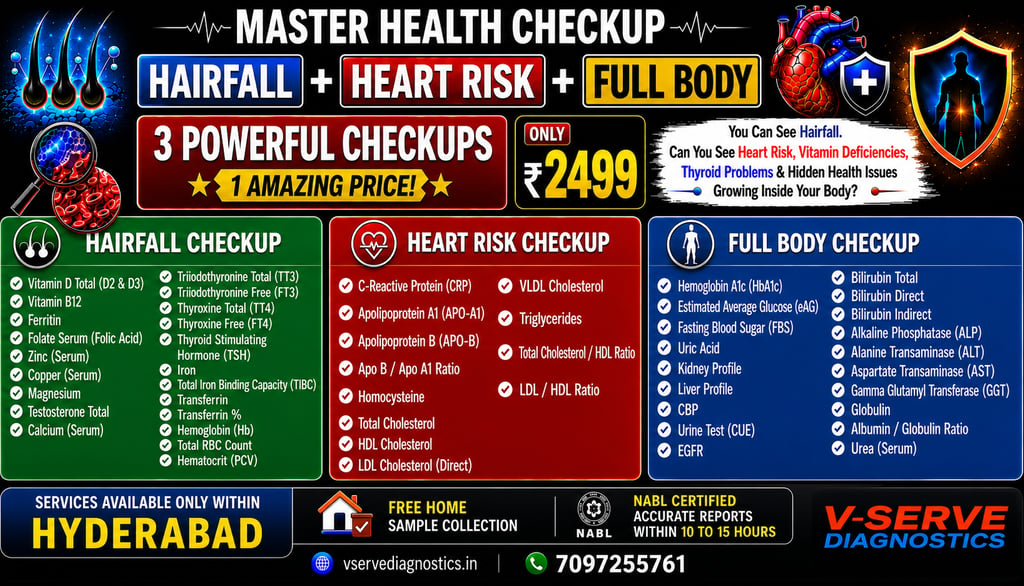
Master Health Checkup in Hyderabad: Hairfall + Heart Risk + Full Body — All 3 Checkups at Just ₹2499
You Can See Your Hair Falling. Can You See What Is Happening Inside Your Body?
Every morning, more hair on the pillow. More strands in the shower drain. Your comb looks like a crime scene. You try a new shampoo, maybe an expensive hair oil. Nothing works. And somewhere in the back of your mind, you wonder — is something wrong with me?
Meanwhile, a colleague your age — 34 years old, gym-going, seemingly healthy — just had a mild heart attack. He had no warning signs. His blood pressure was normal at his last check. He felt completely fine.
And then there is the fatigue. The tiredness that does not go away even after eight hours of sleep. The weight gain that no diet seems to fix. The brain fog that makes you forget what you were going to say mid-sentence.
These are not random inconveniences. These are signals. Your body is trying to tell you something — and you do not have the right tests to decode what it is saying.
At V-Serve Diagnostics, we have designed the most comprehensive Master Health Checkup in Hyderabad — combining three powerful screening panels into one single, affordable package.
Hairfall Checkup + Heart Risk Checkup + Full Body Checkup — only ₹2499.
Free home sample collection. NABL-certified laboratory. Reports within 10–15 hours.
If you have been putting off getting tested — because you are too busy, think you are too young, or assume you would "feel it" if something were wrong — this article is written specifically for you.
Why Hidden Health Problems Often Go Undetected
There is a dangerous myth that most people carry through their 20s, 30s, and even 40s — "If I feel okay, I must be okay."
Doctors call this the silent phase. The period when disease is actively developing inside your body but has not yet produced symptoms that you can feel. This phase can last months or even years.
Consider these facts about common conditions:
Type 2 diabetes typically has no obvious symptoms for the first 3–5 years. By the time you feel excessively thirsty or notice blurred vision, the disease has often already begun damaging your kidneys, nerves, and blood vessels.
Fatty liver disease produces no pain, no nausea, and no visible signs — until it has progressed to significant liver damage.
High cholesterol is completely silent. The only symptom of dangerously elevated LDL cholesterol is, in many cases, a fatal heart attack or stroke.
Hypothyroidism develops so gradually that people attribute the fatigue, weight gain, and hair loss to aging or stress — not a malfunctioning thyroid gland.
Iron deficiency — one of the most common causes of hair loss — can be present for years at a subclinical level, not severe enough to cause anaemia but enough to starve hair follicles of the nutrition they need to function.
The pattern is consistent: diseases develop silently, get missed without targeted testing, and become significantly more expensive and dangerous by the time symptoms appear.
This is the entire reason preventive health screening exists. Not to confirm you are sick — but to catch what you cannot see, feel, or measure without laboratory testing.
Why Hyderabad Professionals Are Choosing Preventive Health Screening
Hyderabad is a high-pressure city. It has one of the largest concentrations of IT professionals, pharmaceutical industry employees, students, and entrepreneurs in India. The lifestyle that comes with this energy is also, unfortunately, one of the most health-damaging.
Here is what a typical working week looks like for a large portion of Hyderabad's working population:
Waking up early, often after insufficient sleep
Skipping breakfast or eating something processed in a hurry
Sitting for 8–12 hours in an office or working from home with minimal movement
Eating heavy, high-carbohydrate meals for lunch and dinner
Working under chronic deadline and performance stress
Getting minimal sun exposure — especially relevant for Vitamin D
Drinking very little water through the day
Eating dinner late, often followed by immediate sleep
This pattern — sustained over months and years — creates the ideal environment for vitamin deficiencies, thyroid disruption, metabolic syndrome, fatty liver, and cardiovascular risk to develop quietly.
The result: Hyderabad's urban working population is increasingly seeing lifestyle disease at younger ages. Heart attacks in 30-year-olds. Fatty liver in people who do not drink alcohol. Hair loss in women in their mid-20s. Pre-diabetes in people who "eat healthy."
Awareness is rising. More working professionals, homemakers, and families in Hyderabad are now choosing to get tested proactively — not when something goes wrong, but before it does.
Understanding the Master Health Checkup
This package brings three independent, specialised health screening panels under one roof — at a combined price that is a fraction of what each would cost separately.
Checkup Panel What It Covers Number of Tests Hairfall Checkup Vitamins, minerals, hormones, thyroid, iron, blood 21 tests Heart Risk Checkup Advanced cardiac markers, cholesterol ratios, inflammation 12 tests Full Body Checkup Diabetes, kidneys, liver, uric acid, blood count, urine 19 tests Total Complete health screening 52+ parameters
All three panels: ₹2499 only.
The nearest equivalent if booked individually at any standard diagnostic centre in Hyderabad would cost ₹6,000–₹9,000 or more.
What Makes This ₹2499 Offer Unique
Before we go into the details of each test, it is worth understanding what makes this package genuinely different from a standard health checkup.
1. It targets the three most common hidden health problems in urban India. Hair loss, heart disease risk, and lifestyle diseases — these are the three areas most commonly missed by standard health checkups, and they are the areas most relevant to working adults in Hyderabad today.
2. The heart risk panel goes far beyond standard cholesterol testing. Most standard packages test only total cholesterol. This package includes Apo-B, Apo-A1, Homocysteine, and CRP — advanced markers that detect cardiovascular risk in people who have perfectly normal standard cholesterol readings. These are the tests that catch "healthy-looking" heart attack cases before they happen.
3. The hairfall panel is genuinely comprehensive. Rather than just testing thyroid or haemoglobin — which is what most people do for hair loss — this panel tests 21 parameters including zinc, copper, magnesium, ferritin, folate, and testosterone. This is the level of investigation that a trichologist or dermatologist would order for a patient with persistent hair loss.
4. Home collection. NABL certified. Reports in 10–15 hours. No travel. No waiting rooms. Certified accuracy. Fast results.
Section 1: Hairfall Checkup — Finding the Root Cause of Your Hair Loss
Why Is My Hair Falling Out?
Hair loss is one of the most distressing health problems that both men and women in Hyderabad face. It affects confidence, self-image, and quality of life. And yet, in the vast majority of cases, hair loss is not a hair problem at all.
It is a symptom.
Hair follicles are among the most metabolically active cells in the human body. They require a constant, adequate supply of vitamins, minerals, hormones, oxygen, and protein to function. When any one of these inputs falls short — even slightly below the optimal range — hair follicles respond by shifting from an active growth phase (anagen) to a resting or shedding phase (telogen).
This is why hair loss is such a sensitive indicator of internal nutritional and hormonal status. Your hair is telling you what a blood test can confirm.
Common Causes of Hair Fall — And Why You Need Tests to Know Which One Is Yours
The causes of hair fall are varied, and without testing, it is impossible to know which one is affecting you:
Iron deficiency and low ferritin — The most common correctable cause of hair loss in women
Vitamin D deficiency — Directly linked to hair follicle cycling; extremely common in Hyderabad office workers
Vitamin B12 deficiency — Essential for cell division in hair follicles; common in vegetarians
Hypothyroidism — Diffuse hair thinning affecting the whole scalp
Low folate (Folic Acid) — Impairs DNA synthesis in rapidly dividing hair follicle cells
Zinc deficiency — Zinc is critical for hair tissue growth and repair
Low testosterone or hormonal imbalance — Particularly relevant in androgenetic alopecia
Anaemia (low haemoglobin and RBC) — Reduces oxygen delivery to follicles
The reason most people spend lakhs on hair treatments that do not work is simple: they are treating the hair without finding the root cause in the blood.
Symptoms That Tell You It Is Time to Get a Hairfall Blood Test
Hair falling in large amounts while washing, combing, or even running fingers through
Noticeably wider parting in women or thinning crown in men
Receding hairline that has progressed in the last 6–12 months
Hair that breaks easily, feels thin, or lacks volume
Hair loss accompanied by fatigue, cold intolerance, or brain fog (thyroid signs)
Hair loss with pale skin, tiredness, or breathlessness (anaemia signs)
Hair loss after a period of major stress, illness, surgery, or dramatic weight loss
If two or more of these apply to you, a targeted hairfall blood test is not optional — it is necessary.
Detailed Explanation of Every Hairfall Test
1. Vitamin D Total (D2 & D3)
Vitamin D receptors are found in hair follicles. Research has shown a clear link between Vitamin D deficiency and increased hair shedding and alopecia areata. This test measures your total Vitamin D level — combining both D2 (from food) and D3 (from sunlight).
Hyderabad residents — particularly those who spend long hours indoors in IT parks — are chronically Vitamin D deficient, even in a city with abundant sunshine.
Optimal range for hair health: Above 40 ng/mL. Many people fall below 20 ng/mL without knowing.
2. Vitamin B12
Hair follicle cells divide rapidly — they need adequate B12 for DNA replication and cell division. Low B12 causes hair follicles to struggle with normal growth, leading to diffuse thinning.
B12 deficiency is extremely common in vegetarians, vegans, and people on long-term metformin (diabetes medication) — all of whom represent a large population segment in Hyderabad.
3. Ferritin (Iron Stores)
This is arguably the single most important test for hair loss in women. Ferritin measures your body's stored iron — the iron reserves available for hair follicle function. Even when haemoglobin is normal, low ferritin can cause significant hair shedding.
Most standard health checkups test iron or haemoglobin. This panel tests ferritin — which is a far more sensitive marker of the iron status that affects hair health.
Optimal ferritin for hair health: Dermatologists typically recommend above 70 ng/mL for minimal hair shedding. Many people with active hair loss have levels below 20 ng/mL.
4. Folate Serum (Folic Acid)
Folic acid is essential for cell division and DNA synthesis. Hair follicles — being among the most rapidly dividing cells in the body — are particularly dependent on adequate folate. Folate deficiency leads to impaired hair matrix cell production and subsequent hair thinning.
5. Zinc Serum
Zinc plays a critical role in hair tissue growth, repair, and the normal functioning of the oil glands around hair follicles. Zinc also inhibits the regression of hair follicles. Zinc deficiency is associated with both male pattern hair loss and the type of diffuse hair loss that follows illness or nutritional deprivation.
6. Copper Serum
Copper works in partnership with iron in haemoglobin production and plays a role in melanin production (hair colour). It also activates enzymes involved in hair follicle development. Low copper is an often-overlooked cause of hair thinning and premature greying.
7. Magnesium
Magnesium is involved in over 300 enzymatic reactions in the body. For hair health specifically, magnesium helps with protein synthesis and plays a regulatory role in calcium deposition within hair follicles. Deficiency is associated with diffuse hair thinning.
8. Testosterone Total
Testosterone imbalance — both high and low levels — affects hair growth patterns. High testosterone (or high DHT, which is derived from testosterone) is the primary driver of androgenetic alopecia (male pattern baldness). In women, elevated testosterone can cause pattern hair loss and facial hair growth. Low testosterone in men is associated with general hair thinning.
9. Calcium Serum
Calcium is required for the signalling that initiates and maintains the hair growth cycle. Imbalances in calcium metabolism — often connected to Vitamin D status — can disrupt normal hair follicle cycling.
10, 11, 12, 13, 14. Thyroid Profile (TT3, FT3, TT4, FT4, TSH)
This is a complete five-parameter thyroid panel — not just a TSH test, but a full picture of thyroid hormone production and conversion.
Why this matters for hair loss:
Both hypothyroidism (underactive thyroid) and hyperthyroidism (overactive thyroid) cause hair loss — but through different mechanisms. Hypothyroidism causes diffuse, slow thinning across the whole scalp. Hyperthyroidism can cause more rapid, generalised shedding.
TSH alone is not enough. A person can have a "normal" TSH but abnormal Free T3 or Free T4 — a condition called subclinical thyroid disorder — which still impacts hair follicle function. Testing all five parameters gives a complete picture.
Thyroid disorders are one of the most common causes of hair loss in Indian women. They are also one of the most treatable.
15. Iron (Serum Iron)
While ferritin measures stored iron, serum iron measures the iron currently circulating in the blood and available for immediate use. Combining serum iron with ferritin, TIBC, and transferrin gives a complete iron status picture.
16, 17, 18. Total Iron Binding Capacity (TIBC), Transferrin, Transferrin %
These three markers work together to show how effectively your body is transporting and utilising iron. High TIBC with low serum iron and low ferritin is the classic pattern of iron deficiency — including the type that causes hair loss before any other symptoms appear.
19. Haemoglobin
Haemoglobin measures the oxygen-carrying protein in red blood cells. When haemoglobin falls below optimal levels (anaemia), the body prioritises oxygen delivery to vital organs — reducing supply to "non-essential" areas like hair follicles. This is why significant anaemia almost always causes hair shedding.
20. Total RBC Count
Red Blood Cell count gives additional context to haemoglobin levels — helping distinguish between different types of anaemia (iron deficiency vs. B12 deficiency vs. other causes), each of which responds to different treatment.
21. Hematocrit (PCV — Packed Cell Volume)
PCV measures the proportion of blood volume made up of red blood cells. It provides another dimension to the assessment of anaemia severity and is particularly useful for monitoring treatment response.
Section 2: Heart Risk Checkup — Because Your Heart Is Already Warning You. You Just Cannot Hear It.
Why Heart Disease Is Increasing in Younger Indians
This is a medical emergency that is unfolding quietly across Indian cities.
A generation ago, heart attacks were largely a condition of men in their 60s and 70s. Today, cardiologists across Hyderabad and India are regularly treating men and women in their 30s and early 40s. The youngest heart attack patient admitted to a major Hyderabad hospital in 2023 was 27 years old.
The reasons are well understood:
Chronic stress elevates cortisol, which raises blood pressure, promotes inflammation, and damages arterial walls
Sedentary lifestyles reduce HDL (protective cholesterol) and increase LDL and triglycerides
Poor dietary patterns — high in refined carbohydrates, trans fats, and processed foods — accelerate atherosclerosis
Inadequate sleep is independently linked to increased cardiovascular risk
Metabolic syndrome — the combination of abdominal obesity, high blood sugar, high triglycerides, and low HDL — is now prevalent among Indians in their 30s
The most dangerous part: standard cholesterol tests miss a significant number of high-risk cases. A person can have a "normal" total cholesterol reading while simultaneously having elevated Apo-B, high Homocysteine, and elevated CRP — all of which indicate significantly elevated heart attack risk.
This is precisely why the Heart Risk Checkup in this package goes far beyond a standard lipid test.
Hidden Heart Risk Factors Most People Ignore
Most people who have had a heart attack report that their last standard cholesterol test was "normal." This is not because cholesterol is an irrelevant marker — it is because standard cholesterol testing misses several critically important risk factors that this package measures.
The markers that people routinely skip:
C-Reactive Protein (CRP) — The inflammation that is silently damaging arteries
Apolipoprotein B (Apo-B) — The actual count of dangerous cholesterol particles in your arteries
Homocysteine — An amino acid that damages arterial walls, dramatically increasing clot risk
Apo-B/Apo-A1 Ratio — A predictive ratio that outperforms LDL alone in cardiovascular risk assessment
These are the tests that catch the cases that standard testing misses. They are what make this Heart Risk Checkup genuinely advanced.
Detailed Explanation of Every Heart Risk Test
1. C-Reactive Protein (CRP)
CRP is a protein produced by the liver in response to inflammation. Inflammation of arterial walls is now understood to be a core mechanism in the development of atherosclerosis — the plaque build-up that eventually blocks coronary arteries.
Elevated CRP levels indicate that your arterial walls may be inflamed — a condition that dramatically increases heart attack risk, even in people with normal cholesterol levels. CRP is also elevated in other inflammatory conditions (infections, autoimmune disease), so it must be interpreted alongside other markers.
High-sensitivity CRP (hsCRP) under 1 mg/L is low risk. 1–3 mg/L is intermediate risk. Above 3 mg/L is high risk.
2. Apolipoprotein A1 (Apo-A1)
Apo-A1 is the primary protein component of HDL — the "good cholesterol." While HDL levels are commonly tested, Apo-A1 is a more precise measure of the actual number of protective HDL particles available to transport cholesterol away from artery walls. Higher Apo-A1 means better cardiac protection.
3. Apolipoprotein B (Apo-B)
This is one of the most important and underutilised cardiovascular risk markers available.
Apo-B measures the actual number of LDL and VLDL particles in the blood — not just their total cholesterol content. Research now shows that Apo-B is a better predictor of cardiovascular events than LDL cholesterol alone.
Here is why this matters: two people can have the same LDL reading but very different numbers of LDL particles. More LDL particles means more opportunities for plaque formation — regardless of what the standard LDL test shows.
A person with "normal" LDL but elevated Apo-B is at genuinely elevated cardiovascular risk — and would never know without this test.
4. Apo-B / Apo-A1 Ratio
This ratio — dangerous particles versus protective particles — is now considered by many cardiologists to be the single most predictive blood marker for future cardiovascular events. Large population studies have confirmed that this ratio outperforms both LDL cholesterol and total cholesterol as a predictor of heart attack risk.
5. Homocysteine
Homocysteine is an amino acid that, when elevated, damages the inner lining of blood vessels (the endothelium), promotes clot formation, and accelerates atherosclerosis.
Elevated homocysteine is strongly linked to:
Increased risk of heart attack and stroke
Blood clots (deep vein thrombosis, pulmonary embolism)
Cognitive decline and dementia
Homocysteine elevation is typically caused by deficiencies in Vitamin B12, folate (Vitamin B9), and Vitamin B6. This means it is often correctable with nutritional supplementation. But you cannot correct what you have not measured.
6. Total Cholesterol
The foundational cardiovascular risk marker. Total cholesterol combines LDL, HDL, and VLDL cholesterol. While not sufficient on its own as a risk indicator, it is an important part of the overall picture.
Optimal: Below 200 mg/dL Borderline high: 200–239 mg/dL High: 240 mg/dL and above
7. HDL Cholesterol
HDL is the protective cholesterol that removes LDL from arterial walls and transports it to the liver for elimination. Higher HDL is better. Low HDL is an independent risk factor for heart disease — even when total cholesterol is normal.
Low HDL is extremely common in people who are sedentary, have high triglycerides, smoke, or have metabolic syndrome — all conditions prevalent in Hyderabad's urban workforce.
8. LDL Cholesterol (Direct)
LDL is the primary cholesterol fraction that deposits in arterial walls and forms plaques. Direct LDL measurement (as opposed to calculated LDL) is significantly more accurate — especially in people with high triglycerides, where the standard calculation method is unreliable.
Optimal for low-risk individuals: Below 100 mg/dL Optimal for high-risk individuals: Below 70 mg/dL
9. VLDL Cholesterol
VLDL carries triglycerides through the blood. Elevated VLDL is closely associated with high triglycerides and metabolic syndrome. It contributes to plaque formation and is part of the overall atherogenic risk picture.
10. Triglycerides
Triglycerides are blood fats derived primarily from dietary carbohydrates and alcohol. Elevated triglycerides are associated with increased risk of heart disease, pancreatitis, and metabolic syndrome.
In Hyderabad, where the diet is heavily carbohydrate-based (rice, bread, sweets), high triglycerides are extremely common even in people who consider themselves healthy eaters.
Optimal: Below 150 mg/dL
11 & 12. Total Cholesterol / HDL Ratio and LDL / HDL Ratio
These two ratios provide more nuanced risk assessment than any single cholesterol number. The TC/HDL ratio and LDL/HDL ratio reflect the balance between dangerous and protective cholesterol particles. A high ratio indicates that the balance has tipped toward cardiovascular risk — even when individual numbers appear acceptable.
Section 3: Full Body Checkup — The Complete Health Baseline Every Adult Needs
What a Full Body Checkup Reveals
The full body checkup component of this package screens for diabetes, kidney health, liver function, overall blood composition, urine analysis, and several additional metabolic markers. Together with the hairfall and heart risk panels, it creates a comprehensive picture of your total health status.
Detailed Explanation of Every Full Body Checkup Test
1. HbA1c (Glycated Haemoglobin)
HbA1c is the gold standard for diabetes diagnosis and monitoring. Unlike a single blood sugar reading, HbA1c reflects your average blood glucose level over the past 2–3 months — giving an accurate picture of long-term sugar control that cannot be manipulated by a single day of careful eating.
Interpretation:
Below 5.7%: Normal
5.7%–6.4%: Pre-diabetes (actionable — reversible with lifestyle changes)
6.5% and above: Diabetes
India has one of the highest diabetes prevalences in the world. Hyderabad's urban workforce has a particularly elevated risk due to sedentary lifestyles and high-carbohydrate diets. Millions of Indians are currently in the pre-diabetes range without knowing it.
2. Estimated Average Glucose (eAG)
eAG converts the HbA1c percentage into an average blood sugar number (mg/dL) — the same unit people use to interpret a glucometer reading. This makes the HbA1c result much more intuitive and easier to understand and discuss with your doctor.
3. Fasting Blood Sugar (FBS)
FBS measures blood glucose after at least 8 hours of fasting. It is the simplest and most direct test for diagnosing diabetes and pre-diabetes. Combined with HbA1c and eAG, it provides a complete picture of your current and long-term blood sugar status.
4. Uric Acid
Uric acid is a metabolic waste product that accumulates when the body processes purines (found in red meat, seafood, and certain vegetables). Elevated uric acid is the primary cause of gout — an acutely painful form of inflammatory arthritis.
However, the relevance of uric acid extends well beyond gout. Elevated uric acid is also associated with:
Kidney stone formation
High blood pressure
Insulin resistance
Cardiovascular disease
Gout is becoming increasingly common in Hyderabad due to dietary patterns, alcohol consumption, and obesity. Catching elevated uric acid early allows for dietary modification and preventive medication before a painful gout attack occurs.
5. Kidney Profile (with eGFR)
The kidney profile is a critical panel that assesses how effectively your kidneys are filtering waste from the blood. It includes:
Creatinine — Waste product filtered by kidneys; elevated levels indicate impaired kidney function
Blood Urea Nitrogen (BUN) / Urea Serum — Another waste marker filtered by kidneys
eGFR (Estimated Glomerular Filtration Rate) — The most accurate single measure of overall kidney filtering capacity
eGFR interpretation:
Above 90: Normal kidney function
60–89: Mildly reduced (monitor closely)
30–59: Moderate kidney disease
Below 30: Severe kidney disease (requires specialist care)
Chronic kidney disease (CKD) is called a silent killer because it causes almost no symptoms until 60–70% of kidney function is already lost. Diabetics and hypertensives are at particularly high risk. Catching declining eGFR early is genuinely life-saving.
6. Liver Profile (with Detailed Enzyme Panel)
This is a comprehensive liver function assessment covering:
Bilirubin Total, Direct, and Indirect — Breakdown product of haemoglobin; elevated levels indicate liver dysfunction, bile duct problems, or haemolytic anaemia
Alkaline Phosphatase (ALP) — Elevated in liver disease, bone disorders, and bile duct obstruction
Alanine Transaminase (ALT) — The most liver-specific enzyme; elevated ALT is the primary marker for liver cell damage (hepatitis, fatty liver, alcohol damage)
Aspartate Transaminase (AST) — Elevated in liver disease, heart disease, and muscle damage; the AST/ALT ratio helps distinguish liver disease from other conditions
Gamma Glutamyl Transferase (GGT) — Sensitive marker for liver disease, bile duct problems, and alcohol consumption; often elevated early in fatty liver disease
Albumin — Protein made by the liver; low albumin indicates chronic liver dysfunction
Globulin and Albumin/Globulin Ratio — Important for assessing liver synthetic function and immune status
Non-alcoholic fatty liver disease (NAFLD) is now extraordinarily common in urban India — affecting an estimated 25–30% of adults, most of whom have no symptoms. Elevated ALT and GGT are often the first detectable sign of fatty liver — identifiable through this panel before any structural change is visible on ultrasound.
7. CBP / CBC (Complete Blood Picture)
The Complete Blood Picture is a cornerstone of medical screening. It analyses:
Red blood cells (RBC count, size, shape)
Haemoglobin level
White blood cells (total and differential count — neutrophils, lymphocytes, eosinophils, basophils, monocytes)
Platelets
A single CBC can provide clues about:
Anaemia (cause and severity)
Infections (bacterial infections elevate neutrophils; viral infections elevate lymphocytes)
Allergic reactions or parasitic infections (elevated eosinophils)
Bleeding disorders (low platelets)
Blood cancers (abnormal WBC patterns)
Bone marrow disorders
8. Urine Test — Complete Urine Examination (CUE)
Urine reflects what your kidneys are doing. The CUE examines:
Physical properties (colour, clarity, specific gravity)
Chemical properties (pH, glucose, protein, ketones, blood, bilirubin, urobilinogen, nitrites, leukocyte esterase)
Microscopic examination (RBCs, WBCs, casts, crystals, bacteria)
What CUE can detect:
Urinary tract infections (UTI)
Early diabetic kidney disease (protein in urine — microalbuminuria)
Kidney stones (crystals, blood)
Bladder infections or inflammation
Liver disease (bilirubin in urine)
The appearance of protein in the urine is one of the earliest detectable signs of kidney damage in diabetics — often appearing years before any blood marker of kidney function deteriorates. This is why urine testing is so important alongside a blood kidney profile.
Diseases That Can Be Detected Early With This Master Health Checkup
Disease Tests That Detect It Type 2 Diabetes HbA1c, FBS, eAG Pre-Diabetes HbA1c, FBS Hypothyroidism TSH, FT3, FT4, TT3, TT4 Hyperthyroidism TSH, FT3, FT4 Iron Deficiency Anaemia Ferritin, Iron, TIBC, Hb, RBC Vitamin D Deficiency Vitamin D Total B12 Deficiency Vitamin B12 Folate Deficiency Folate Serum Fatty Liver Disease ALT, AST, GGT, ALP Chronic Kidney Disease Creatinine, eGFR, Urea, CUE Cardiovascular Disease Risk CRP, Apo-B, Apo-A1, Homocysteine, Lipid Panel Gout / Uric Acid Issues Uric Acid Anaemia (Various Types) CBC/CBP, Hb, Ferritin, B12, Folate Rheumatoid Arthritis (pattern) ESR, CRP Zinc / Magnesium / Copper Deficiency Zinc, Magnesium, Copper
Benefits of Regular Health Checkups
Annual health screening delivers benefits that extend far beyond simply knowing your test numbers:
1. Catch diseases before symptoms appear. The entire value of preventive testing lies in this. Finding a problem at Stage 0 or Stage 1 is dramatically different from finding it at Stage 3 or Stage 4.
2. Establish your personal baseline. Normal ranges on test reports are population averages. Your personal optimal may differ. Doing this test annually allows you and your doctor to track your individual trends — which is far more meaningful than a single data point.
3. Motivate lifestyle improvements. Seeing that your triglycerides are elevated or your Vitamin D is dangerously low is often the nudge people need to actually change their diet, start supplementing, or begin exercising. Abstract knowledge ("I should eat better") does not motivate change the way a concrete blood test result does.
4. Save money over the long term. The cost of treating established diabetes, heart disease, or chronic kidney disease runs into lakhs of rupees annually. Preventing or delaying these through early detection and intervention pays dividends that are genuinely difficult to quantify.
5. Peace of mind. Coming through a comprehensive health screen with normal results is genuinely reassuring. It lets you carry on with life with a degree of confidence that assumptions and feelings simply cannot provide.
Who Should Take This Master Health Checkup?
This package is appropriate for a very wide range of people. But it is particularly valuable for:
IT professionals and corporate employees in Hyderabad Long working hours, desk-bound lifestyles, high stress, poor dietary habits, minimal sun exposure. This demographic is at elevated risk for virtually every condition this package screens for.
Men and women aged 25–45 This is the age group where lifestyle diseases begin developing silently. It is also the group least likely to believe they need health testing. This is precisely the right time to establish a health baseline.
Women experiencing hair loss The hairfall panel in this package is the most comprehensive commercially available blood test for hair loss causes. Every woman experiencing significant hair thinning or shedding should have these tests done.
Anyone with a family history of heart disease, diabetes, or thyroid problems Genetic predisposition dramatically increases personal risk. Knowing your risk factors early is especially important when your family history works against you.
Senior citizens aged 50 and above Multiple organ systems need monitoring at this life stage. The comprehensive nature of this package makes it an ideal annual checkup for older adults.
People who are overweight or have abdominal obesity This population is at elevated risk for metabolic syndrome, fatty liver, pre-diabetes, and cardiovascular disease — all of which are covered in this package.
People who are always tired, losing hair, or feel "not quite right" If your energy levels are consistently low, your hair is falling, and you feel like something is off — this package is likely to tell you why.
Why Home Sample Collection Is a Game Changer
The single biggest barrier to preventive health testing in India is not cost. It is inconvenience.
People avoid health tests because the process feels like a punishment — wake up early after fasting, fight Hyderabad traffic, find parking, wait in a crowded lab, finally get the test done, then wait a week for results. Most people simply never get around to doing it.
V-Serve Diagnostics eliminates this barrier entirely.
Here is how the home sample collection process works:
Book your appointment — Call 7097255761 or visit vservediagnostics.in. Choose a date and time that works for you.
A trained phlebotomist comes to your home or office — At your scheduled time, a qualified and experienced blood sample collection specialist arrives at your door.
The collection takes 5–10 minutes — Sterile, single-use equipment only. Hygienic, quick, and professionally handled.
Samples are transported to our NABL-certified laboratory — In temperature-controlled conditions that preserve sample integrity.
Reports are ready within 10–15 hours — Delivered digitally via WhatsApp or email. No additional trips required.
This means: You fast overnight, wake up at home, give your sample without leaving your bedroom, and have comprehensive health reports in your phone before the evening is over.
No travel. No queues. No wasted half-day. No stress.
Why NABL Certification Matters
You may see many diagnostic centres in Hyderabad offering health checkup packages at various prices. What you must ask is: how reliable are the results?
NABL — the National Accreditation Board for Testing and Calibration Laboratories — is India's premier accreditation body for medical testing laboratories. NABL certification is not automatic. It requires:
Rigorous assessment of testing equipment calibration and maintenance
Validation of testing procedures and methodologies
Proof of qualified, trained laboratory personnel
External quality assurance and proficiency testing
Documented quality management systems
Periodic re-inspection and re-accreditation
What NABL certification means for you as a patient: the results you receive are accurate, reproducible, and meet international quality standards. This matters enormously when test results are being used to make treatment decisions.
V-Serve Diagnostics is a NABL-certified diagnostic laboratory. Your results are not just numbers — they are reliable numbers you can act on.
Why Fast Reporting Matters
A health test is only useful when you receive the results. Reports that take 3–5 days create anxiety, create delays in treatment decisions, and — in many cases — simply never get acted upon.
V-Serve Diagnostics delivers reports within 10–15 hours of sample collection.
This means:
Give your sample in the morning
Receive comprehensive, 52-parameter health reports by evening
Consult your doctor the same day or the next morning
Start acting on your results without unnecessary delay
In a world where speed matters, faster results mean faster intervention when intervention is needed.
Real Life Scenarios — This Is More Common Than You Think
Scenario 1: Priya, 31, Software Engineer, Kondapur Priya had been losing hair for two years. She had tried three different shampoos and a well-known hair oil. She assumed it was stress from project deadlines. Her hairfall blood test showed ferritin of 11 ng/mL (severely low), Vitamin D of 14 ng/mL (deficient), and subclinical hypothyroidism (normal TSH but low Free T3). Three months of targeted supplementation and thyroid support reversed her hair loss.
Scenario 2: Ravi, 38, Business Owner, Banjara Hills Ravi went to his gym five days a week, did not smoke, and ate what he considered a healthy diet. His standard cholesterol test at a routine corporate checkup showed a "normal" total cholesterol of 195 mg/dL. His advanced heart risk panel told a different story — Apo-B was elevated at 128 mg/dL, homocysteine was at 18 µmol/L (high risk), and CRP was 3.8 mg/L. His cardiologist placed him on targeted intervention. He might otherwise have had a heart attack at 43.
Scenario 3: Lakshmi, 54, Homemaker, Kukatpally Lakshmi was always tired, had mild joint aches, and had been gaining weight. She assumed it was "getting older." Her full body checkup showed HbA1c of 6.2% (pre-diabetes), eGFR of 68 (mildly reduced kidney function), and elevated GGT (early fatty liver). None of these conditions caused symptoms she could identify. With early intervention — dietary changes, exercise, and medication — all three markers were brought under control within six months.
These are not extraordinary cases. They are typical of what structured preventive screening finds every single day.
The Cost of Ignoring Early Warning Signs
Healthcare economics in India is simple and brutal: the earlier you detect and intervene, the cheaper the outcome.
Condition Early Detection Cost Late-Stage Treatment Cost Pre-diabetes (lifestyle intervention) ₹0–₹500/month Diabetes management: ₹3,000–₹8,000/month for life Early fatty liver (diet change) ₹0 Liver cirrhosis treatment: ₹5–₹20 lakhs Vitamin D deficiency (supplement) ₹200–₹500/month Osteoporosis surgery: ₹3–₹8 lakhs High Apo-B (statin + lifestyle) ₹300–₹1,000/month Coronary angioplasty/bypass: ₹3–₹10 lakhs Early CKD (medication + diet) ₹500–₹2,000/month Dialysis: ₹30,000–₹60,000/month for life
The ₹2,499 you spend today on this Master Health Checkup is not an expense. It is the most cost-efficient investment in your health that you can possibly make.
Frequently Asked Questions (FAQs)
Q1: What is included in the Master Health Checkup at V-Serve Diagnostics?
A: The Master Health Checkup includes three comprehensive panels — a 21-parameter Hairfall Checkup, a 12-parameter Heart Risk Checkup, and a 19-parameter Full Body Checkup — totalling 52+ tests, all for ₹2499.
Q2: Is this checkup available for both men and women?
A: Yes. The package is designed for both men and women. Certain markers — such as testosterone — are particularly relevant to specific genders but are included for completeness and hormonal health assessment.
Q3: Do I need to fast before the test?
A: Yes. A fast of 8–10 hours is required for accurate results on the Fasting Blood Sugar, Lipid Profile, and certain other parameters. Plain water is permitted during the fasting period. Avoid medications in the morning until after the sample is collected unless your doctor specifically advises otherwise.
Q4: How long before I receive my reports?
A: Reports are delivered within 10–15 hours of sample collection, digitally via WhatsApp or email. No physical visit to the lab is required to collect reports.
Q5: Is there any extra charge for home sample collection?
A: No. Home sample collection in Hyderabad is completely free of charge with this package.
Q6: Is V-Serve Diagnostics a NABL-certified lab?
A: Yes. V-Serve Diagnostics is NABL-certified, ensuring that all test results meet nationally and internationally recognised standards of accuracy and reliability.
Q7: Why is the Ferritin test more important than the standard Iron test for hair loss?
A: Serum iron measures what is currently circulating in the blood. Ferritin measures iron stores — the reserve your body draws on to supply hair follicles. A person can have normal serum iron but depleted ferritin stores, which directly impairs hair growth. Ferritin is the more clinically relevant marker for hair loss, and it is the one most commonly low in women with diffuse hair thinning.
Q8: What is Apo-B and why is it important?
A: Apolipoprotein B (Apo-B) measures the actual number of LDL and VLDL particles in the blood — the particles that embed in arterial walls and form plaques. Standard LDL testing measures only the cholesterol content of these particles. Research consistently shows that particle count (Apo-B) is a better predictor of cardiovascular events than LDL cholesterol alone. Many people with normal LDL have elevated Apo-B — and genuinely elevated heart attack risk.
Q9: What is Homocysteine and why should I be concerned about high levels?
A: Homocysteine is an amino acid produced during protein metabolism. When levels are elevated — a condition called hyperhomocysteinaemia — it directly damages arterial walls, promotes blood clot formation, and accelerates the development of atherosclerosis. Elevated homocysteine is an independent risk factor for heart attack, stroke, and cognitive decline. It is often caused by deficiencies in B12, folate, and B6 — all correctable with supplementation.
Q10: What is eGFR and what does a low eGFR mean?
A: eGFR stands for Estimated Glomerular Filtration Rate — the most accurate measure of how well your kidneys are filtering blood. An eGFR above 90 is normal. Values between 60–89 indicate mildly reduced function that should be monitored. Values below 60 indicate moderate to severe chronic kidney disease requiring specialist evaluation and management.
Q11: Can someone have heart disease risk even with normal total cholesterol?
A: Yes — and this is one of the most important public health messages in modern cardiology. A significant proportion of heart attack patients have "normal" total cholesterol. Advanced markers like Apo-B, CRP, Homocysteine, and the Apo-B/Apo-A1 ratio detect cardiovascular risk that standard cholesterol testing misses. This is why the Heart Risk panel in this package includes these advanced markers.
Q12: Can thyroid problems really cause hair loss?
A: Yes — both hypothyroidism (underactive thyroid) and hyperthyroidism (overactive thyroid) can cause significant hair loss. Thyroid hormones regulate the hair growth cycle. When thyroid function is disrupted, hair follicles shift from the active growth phase to the shedding phase. Treating the underlying thyroid disorder typically reverses the hair loss over several months.
Q13: I am 27 years old and feel healthy. Do I really need this?
A: The fact that you feel healthy is not evidence that you are healthy at a biochemical level. Pre-diabetes, early kidney disease, fatty liver, Vitamin D deficiency, elevated Apo-B, and iron deficiency produce no symptoms in the early stages. The value of this test at 27 is to establish a baseline and catch anything developing before it progresses. The earlier any of these are found, the easier they are to address.
Q14: How often should I get a master health checkup?
A: For adults under 30 with no risk factors: once every 1–2 years. For adults aged 30–45: annually. For adults above 45 or anyone with known risk factors (diabetes, hypertension, family history of heart disease): every 6 months to 1 year as advised by your doctor.
Q15: Which areas of Hyderabad does V-Serve Diagnostics cover for home collection?
A: V-Serve Diagnostics covers all major areas including Madhapur, Hitech City, Gachibowli, Kukatpally, Banjara Hills, Jubilee Hills, Ameerpet, Kondapur, Miyapur, Secunderabad, Begumpet, and surrounding localities. Call 7097255761 to confirm availability in your specific area.
Q16: Is the hairfall test useful for men as well as women?
A: Absolutely. While hair loss is more emotionally distressing for women, men can also have nutritional and hormonal causes for hair loss that respond to treatment. Testosterone levels, zinc deficiency, thyroid disorders, and iron status are all relevant for men experiencing hair thinning.
Q17: What does a high CRP level mean?
A: CRP (C-Reactive Protein) is a marker of systemic inflammation. A high CRP level indicates that significant inflammation is present somewhere in the body. In the context of cardiovascular risk, it suggests arterial inflammation — a key driver of plaque build-up and heart attack risk. It can also indicate other inflammatory conditions such as infections, autoimmune diseases, or inflammatory bowel disease.
Q18: Can I book this test for a family member?
A: Yes. You can book this package for yourself, your spouse, parents, or any family member. The home sample collection service means even elderly or mobility-limited family members can access this testing without any difficulty.
Q19: What if my results show something abnormal?
A: Your reports will clearly indicate which results are outside the normal range. We recommend sharing your complete report with your primary care physician or a specialist for interpretation and treatment planning. Do not self-diagnose or self-medicate based solely on test results.
Q20: Is fasting required for all the tests in the package?
A: Fasting (8–10 hours) is required for the most accurate results on Fasting Blood Sugar, Lipid Profile (triglycerides, LDL, VLDL), and certain other parameters. While some tests do not strictly require fasting, since all tests are done from the same blood draw, fasting for the full panel ensures maximum accuracy across all results.
Q21: What makes V-Serve Diagnostics better than other labs offering similar packages?
A: V-Serve Diagnostics offers NABL-certified testing (guaranteed accuracy), free home collection (genuine convenience), reports within 10–15 hours (fast turnaround), and a comprehensively designed package that includes advanced cardiac markers, a dedicated hairfall panel, and a full body screen — all at ₹2499. This combination of quality, convenience, speed, and value is genuinely difficult to match.
Q22: Can high uric acid cause problems beyond gout?
A: Yes. Elevated uric acid is increasingly recognised as a cardiovascular risk factor and a contributor to kidney disease, insulin resistance, and hypertension — beyond its direct role in causing gout and kidney stones. Managing uric acid through diet and medication has implications that extend beyond joint health.
Q23: What is the significance of the Albumin/Globulin ratio in the liver test?
A: The Albumin/Globulin (A/G) ratio reflects the balance between albumin (produced by the liver) and globulins (produced by the immune system). A low ratio — where globulins exceed albumin — can indicate chronic liver disease, chronic inflammation, autoimmune conditions, or kidney disease causing albumin loss. It is a sensitive marker of liver synthetic function that adds clinical value beyond individual protein measurements.
Q24: Why are both total and free thyroid hormones tested in the hairfall panel?
A: Total T3 and T4 measure all thyroid hormone in the blood (both bound and free). Free T3 and Free T4 measure only the unbound, biologically active fraction — the portion actually available to cells. A person can have normal total T3/T4 but low free fractions if there is a protein binding abnormality. Testing both gives a complete and accurate picture of true thyroid hormone availability at the tissue level.
Q25: Is ₹2499 the final price or are there additional charges?
A: ₹2499 is the complete, all-inclusive price for the Master Health Checkup package. There are no additional charges for home sample collection, report delivery, or any other service. Transparent pricing with no hidden additions.
Why This Package Offers Exceptional Value
Let us put the pricing in perspective.
If you were to book each component of this package individually at standard diagnostic centre rates in Hyderabad:
Panel Approximate Market Price Comprehensive Hairfall Panel (21 tests) ₹3,500–₹5,000 Advanced Heart Risk Panel (12 tests) ₹2,500–₹4,000 Full Body Panel (19 tests) ₹2,000–₹3,500 Total at standard pricing ₹8,000–₹12,500 V-Serve Diagnostics price ₹2,499
This is not a discount on a stripped-down package. This is a genuine, comprehensive, medically meaningful screening package — the kind of testing that gives real answers to real health questions — at a price point that makes preventive healthcare accessible to working families in Hyderabad.
Conclusion: The Most Important Health Decision You Will Make This Year
You have read this far. Which means some part of you knows that the tests you have been putting off matter. That the hair falling, the fatigue you cannot shake, the family history of heart disease, the weight that will not budge — these things deserve proper investigation, not guesswork.
The Master Health Checkup at V-Serve Diagnostics gives you 52+ parameters of genuine health intelligence. It covers the causes of your hair loss in greater depth than most dermatologists investigate. It assesses your heart risk with advanced markers that go far beyond what a standard corporate checkup provides. It evaluates your blood sugar, kidneys, liver, and blood composition comprehensively.
All of this — for ₹2499. At home. With results in 10–15 hours. From a NABL-certified laboratory.
There is no easier or more affordable entry point into knowing your health than this.
Book Your Master Health Checkup Today
Do not wait for symptoms. Do not wait for a scare. Do not wait for someone you love to need emergency hospitalisation before you take your own health seriously.
✅ What You Get With This Package:
✔ 21-Parameter Hairfall Checkup — Find the root cause of your hair loss
✔ 12-Parameter Advanced Heart Risk Checkup — Know your real cardiovascular risk
✔ 19-Parameter Full Body Checkup — Complete health baseline
✔ 52+ total parameters in one comprehensive report
✔ Free home sample collection — We come to you
✔ NABL-certified accurate testing
✔ Reports within 10–15 hours — delivered digitally
✔ Available across Hyderabad
✔ All three checkups: ₹2499 only
📞 Call or WhatsApp: 7097255761
🌐 Website: vservediagnostics.in
V-Serve Diagnostics — NABL Certified | Hyderabad | Free Home Collection | Reports in 10–15 Hours
Book today. Know tomorrow. Act early.
Disclaimer: This article is for informational and educational purposes only and does not constitute medical advice. Always consult a qualified healthcare professional for diagnosis and treatment decisions based on your test results.